So sorry I’m posting these so late, I was planning to write them yesterday but then I saw Iron Lung and it was all I could think about for the rest of the day…. anyway. Fun fact – did you know the acorus calamus plant, which this collection of poems is named for, contains psychoactive chemicals? Now you do! I wonder if Walt did…
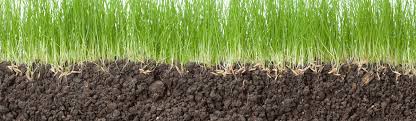
Throughout these poems, Walt seems to be exploring a number of underlying themes. Something I picked up immediately in “Scented Herbage of My Breast” is the body-soul-nature collective we briefly talked about in class today, or rather the blurring of lines between each. What exactly are the plants Whitman is writing about here? What do they represent? They’re linked to his body, particularly his heart, in the title of the poem itself and in lines like “…O blossoms of my blood! I permit you to tell in your own way of the heart that is under you” (line 7). The body as nature, and nature as the body. “Roots and Leaves Themselves Alone” repeats this theme, but on a universal rather than personal scale – “Roots and leaves themselves alone are these/Scents brought to men and women from the wild woods and pond-side/Breast-sorrel and pinks of love, fingers that wind around tighter than vines” (lines 1 – 3). Here, the language used to describe the plants in line 3 clearly associates them with the body, but rather than being part of “the men and women,” they are brought to the people.
In “Scented Herbage of My Breast,” these plants are also connected to both cyclical renewal – “Every year you shall bloom again…” (line 5) – and death – “…you make me think of death,/Death is beautiful from you…” (lines 8 – 9).
Speaking of death, the way Whitman talks about it in these poems is really interesting. In “Scented Herbage of My Breast, the lines “…it is not for life I am chanting here my chant of lovers, I think it must be for death” (line 10) and “Through me shall the words be said to make death exhilarating” (line 25). The Great Poet speaks not only for America, nature, and whatever other conventions we’ve come to expect from Whitman – here, he explicitly establishes himself as speaking for death. Again I wonder, what exactly is this death? Is it literal, or representative of something more complex? The unique kind of love Calamus centers on has a surprising amount to do with this mysterious death. In “Whoever You Are Holding Me Now in Hand,” Whitman says that “thus touching you [a lover, presumably] would I silently sleep and be carried eternally” (line 26). Silently sleeping eternally certainly sounds like death, but what kind of death is inspired by the touch of a lover, and why? There are a couple other unusual death-related things I noticed throughout these poems but they may be more of a stretch, so I’ll leave them out of this particular post.
I could probably go on a lot longer about Calamus, but for now I’ll just briefly mention a few other repeated themes I noticed in case you want more to discuss or think about:
- Society, and what exists outside of it – particularly in the context of the homosocial (?) love these poems are about
- In a related vein, society/heteronormativity as a false reality or illusion, versus homosocial love as the true or transcendent reality (this one really interests me but I can’t quite wrap my head around it enough to write a constructive paragraph about it)
- American identity and the so-called “robust love”
- The juxtaposition of homosocial-ity and heteronormativity