1


Today, this little purple crocus appeared in our backyard. Our first flower of Spring!
It’s not a lilac per se, but the fact that it appeared today on the day we discussed that particular poem feels meaningful to me. It’s like a little “hello” from the Whitman beyond, so naturally I wanted to share with you all.
As promised in class, I am opening this topic for discussion since we didn’t get to it today. I think there are many ways that this connects to (but is not the same as) Whitman’s model of selfhood, which some of you may be writing about through the prompt in Response #1. The basic question might be phrased something like this: when Whitman represents, includes, or speaks for others, does he do so ethically and in a way that respects their otherness from him (in identity and experience)? I think we also want to think through what might be our contemporary understanding of that question as well as what it might have meant in his own historical moment.
A few passages in which we might ground discussion. Feel free to add more.
Section 24, page 211, the two stanzas beginning “Through me many long dumb voices”
Section 33 following the long catalog, starting page 224 with “I am a free companion” and continuing through the rest of section on 226.
Nothing academic to add I just think it’s really important everyone know this was my exact reaction when Whitman thought it essential to add “the scent of these arm-pits is aroma finer than prayer” to his poem:


This is super random, but this thought came to me as I was re-reading “Song of the Open Road”. It honestly reminds me a lot of Forrest Gump (W movie, if you haven’t seen it, you should). Bear with me on this one. While the story is about a lot more than just running, it’s kind of Forrest’s primary thing he’s known for. He leaves everything and spends 3 years running across the country for no reason, with no destination in mind. He’s just running. Remind you of anything? Perhaps Whitman’s own journey on the open road to find himself? Whitman invites everyone to join him on his travels, encouraging them to drop everything, and take to the road much like Forrest, though Forrest does so unintentionally. This scene in particular makes me think of Whitman leading the people on his “long brown path”.
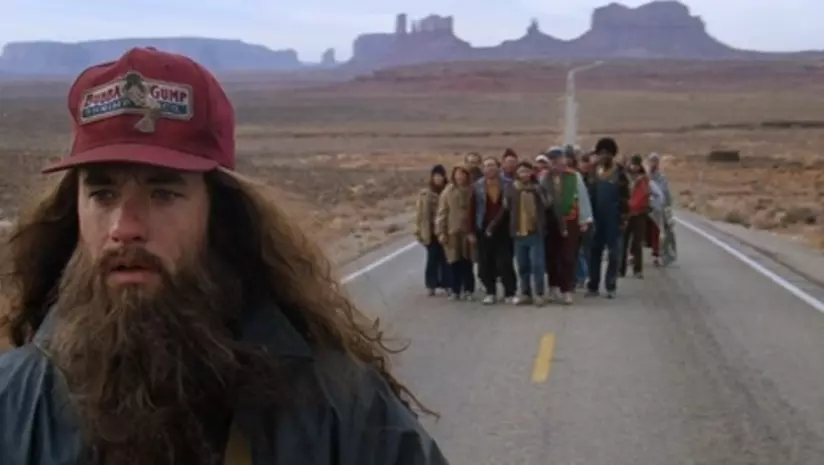
Obviously, there are many differences between the two men, considering Forrest Gump has an IQ of 75 and Whitman is, well, Whitman, but I thought it was a fun comparison and wanted to share. If you’re interested to see the part of the movie I’m referencing, I’ll put a youtube link below!
Is your analysis of Whitman as a commercial agent changed by the fact that this is a luxury vehicle rather than jeans? As in my prior post (people, seriously, this is turning into Blog of Myself, you have to get on it), what does this commercial say about America? About masculinity? About freedom? Feel free to analyze any specific moments also.
These ads appeared roughly 15 years ago, and when you’ve done your (excessive, sorry [kind of]) homework for Tuesday, you’ll recognize the first voice. As we consider Whitman’s America, and circa 2010 America, and 2026 America, I invite you to analyze these videos. Is this a portrait of America WW would have recognized? embraced? rejected? Why? Would it matter to Whitman, or does it matter to you, that the poetry, and the Whitmanish slogan, were mobilized to sell jeans (by a massive company worth billions, founded by a German Jewish immigrant that began making jeans for working men during Whitman’s lifetime)? For that matter, is this an America YOU recognize? If the ads are trying to sell both jeans AND a vision of America, what do you make of that vision?