1

Poem 533 is one that we saw in the letters and dissected its implications for her relationship with religion (which is a complex one, of course). It struck me when I was reading this set of poems not only because it was familiar, but also because it feels so powerful after reading the poem where she contemplates her relationship with being a poet. ED says in 533 that poetry is everything, it “Comprehend[s] the Whole” (line 6). Reading and writing (and experiencing) poetry tells her all she needs to know about the world, all there is to know.
It seems that every time ED is metapoetic, my heart swells a little. I love knowing that she was so passionate about the art of hers and others’ words, and I love that she finds the artistic-ness of poetry outside of poems. Lines three and four of poem 546 are so precious to me: “But stopped, when qualified to guess / How prayer would feel – to me -” and I feel like this aligns the beginning of her creating poetic art with the beginning of her questioning her faith (or rather, questioning her religion). The last stanza of poem 546 really makes me feel this alignment–she has so gracefully thrown off the poetic balance of the stanza as she talks about her faith and/or religion being so hard to balance and to “poise” (line 20).
ED’s use of poetry as a way to digest the entire world and frankly, her existence, I feel these two poems really strongly represent what she believes in. And I think that, above all else, ED believed in poetry. The power of poetry, the devastation of poetry, the responsibility of poetry, the beauty of poetry, and absolutely everything in between.
This is my April 2 work.
I promise I will connect this all…
Much of my Response 4 involved thinking about how ED characterized Death (yes, capital D) in her letters, and how she spoke of Death as a relief/release. She talked of Death as a means to Heaven and how life after Death was the ultimate safe space, the ultimate home. So, since having recently writing my response thinking about this, I had this idea in my mind when reading all of the poems for today.
I found poem 120 very sweet in its suggestion that Heaven can mean anything to anyone–it is neither static nor extravagant but that it is made of simple pleasures.
With both of these ideas top of my mind, I read poem 121 (and most especially, the ending) as ED suggesting that Sue is her Heaven. ED either does not want to or is not able to give Sue the extravagant things in life, but she does not need to. Sue is her home, she is her heaven.
I just love these ladies.
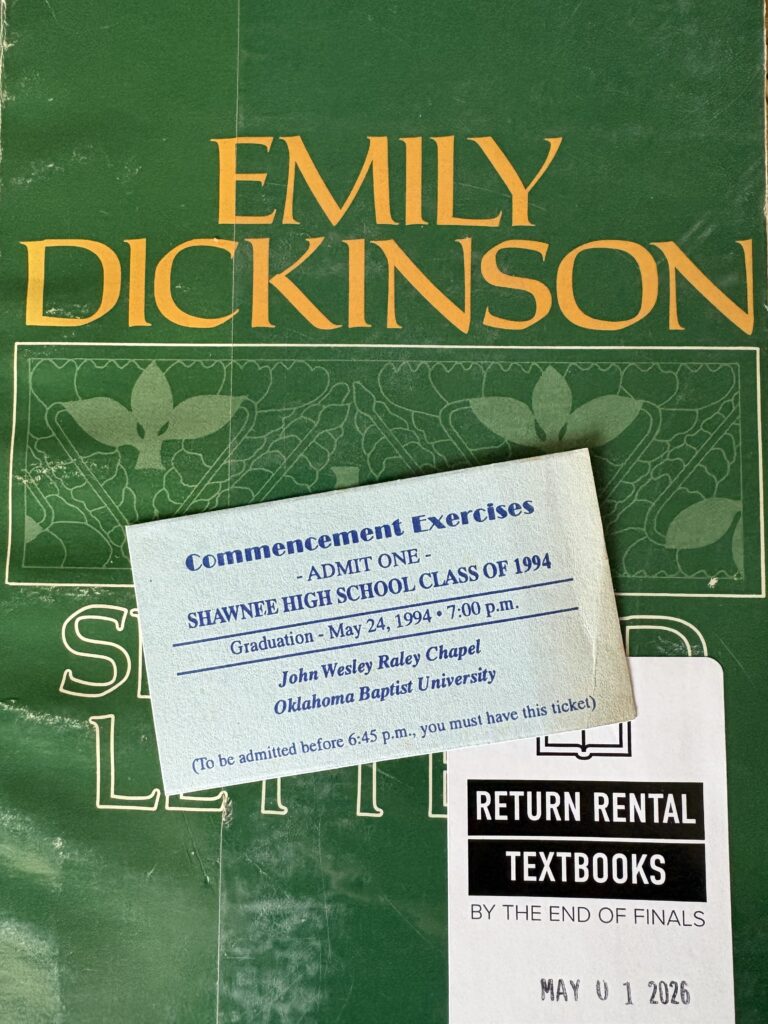
I opened my book of ED’s letters from the UMW bookstore and this Oklahoma high school graduation ticket from 1994 popped out. I don’t have much to say, but I think it is so special that ED has traveled so far from her home is Massachusetts.
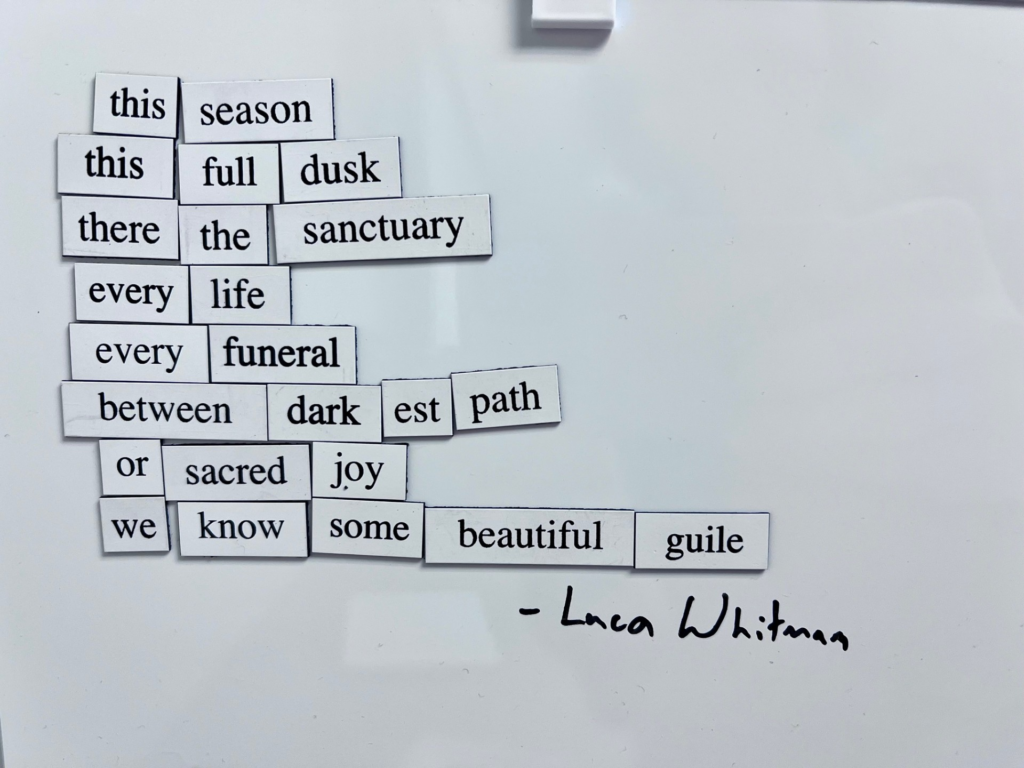
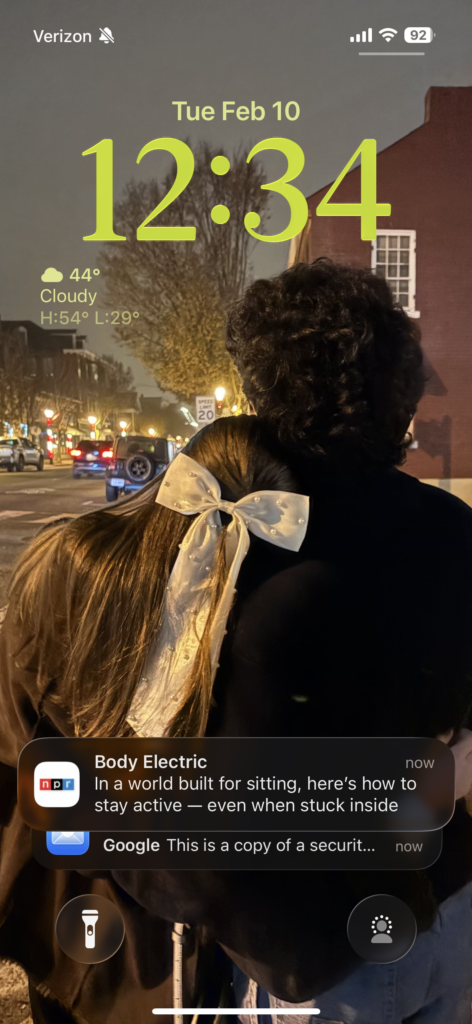
I got this NPR notification yesterday shortly after our class, and it got me thinking. If he were around today, would Whitman really be encouraging people to get up and work out? I don’t really think so. I think that he would be encouraging us to turn off our phones and think for ourselves instead.
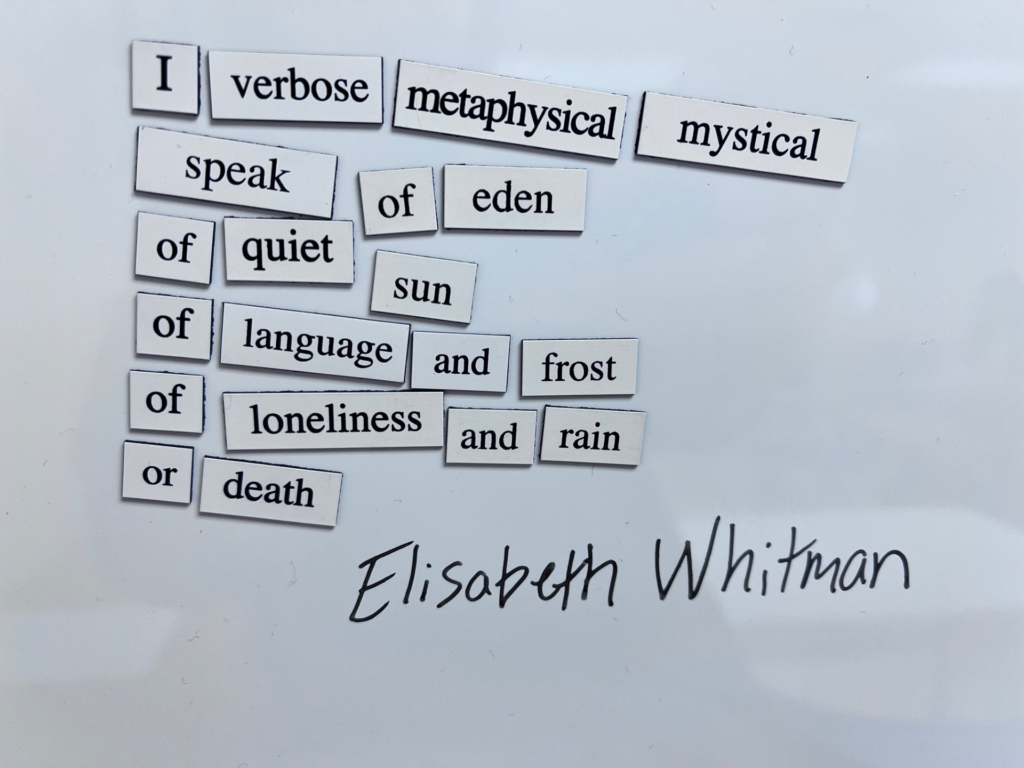
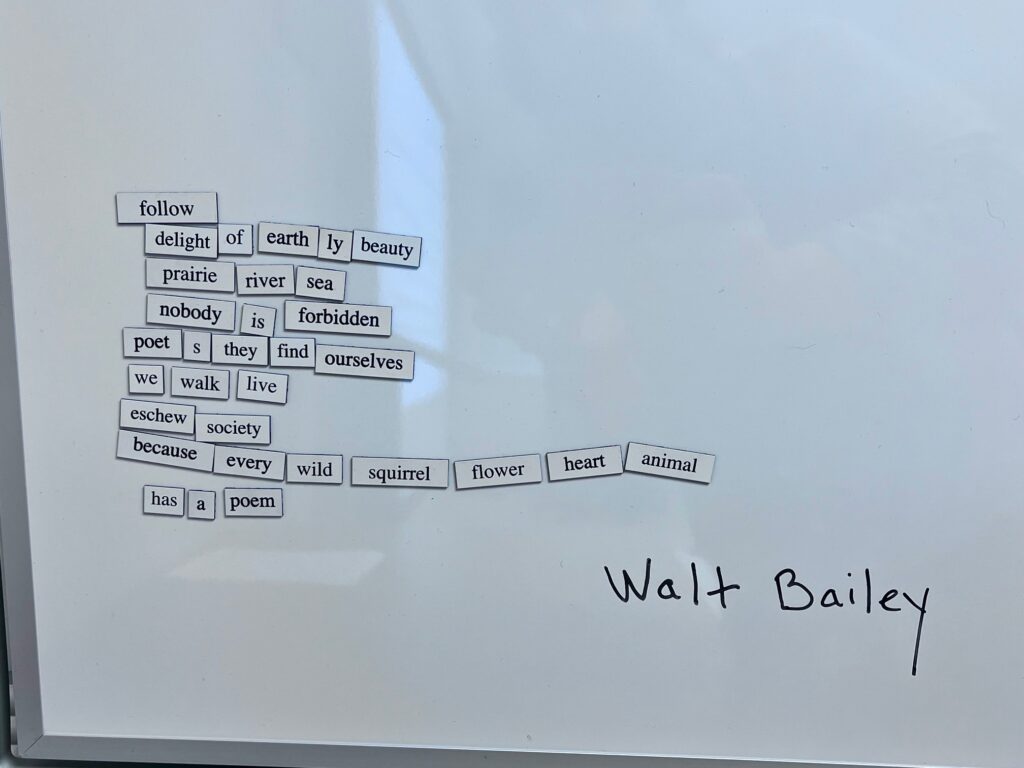
While I do agree with the points made in class about Whitman desiring to remember all of the important things in life, things that are simple and honest and good, I also feel a little bit critical of this section. He talks about wanting to be like animals because they are not concerned with productivity and materialism and vanity, which is fair, but he criticizes humans for being sweaty, whiny, religious, materialistic, industrious, and the like without questioning what has made humans that way. I would argue that the negative traits he attaches here to humans (and almost, to human nature) are not inherent to humans but rather imposed on them by society, the government, the social contract, etc. I do not feel that it is completely fair of him to desire to be more like animals because he wants to be less like humans, especially since he spends so much time focusing on the beauty and strength in individuals. It makes sense that he would want to get away from these things, but I think the passage could be strengthened by a criticism of, say, ideological state apparatuses.
Nothing academic to add I just think it’s really important everyone know this was my exact reaction when Whitman thought it essential to add “the scent of these arm-pits is aroma finer than prayer” to his poem: