Ever-Returning Spring

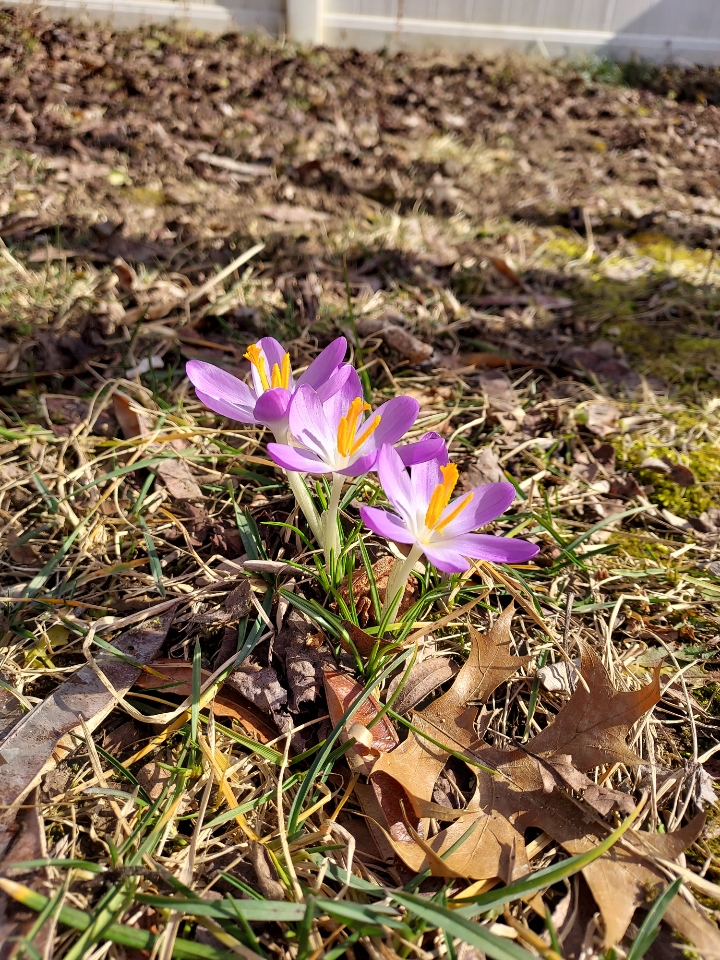
Today, this little purple crocus appeared in our backyard. Our first flower of Spring!

It’s not a lilac per se, but the fact that it appeared today on the day we discussed that particular poem feels meaningful to me. It’s like a little “hello” from the Whitman beyond, so naturally I wanted to share with you all.

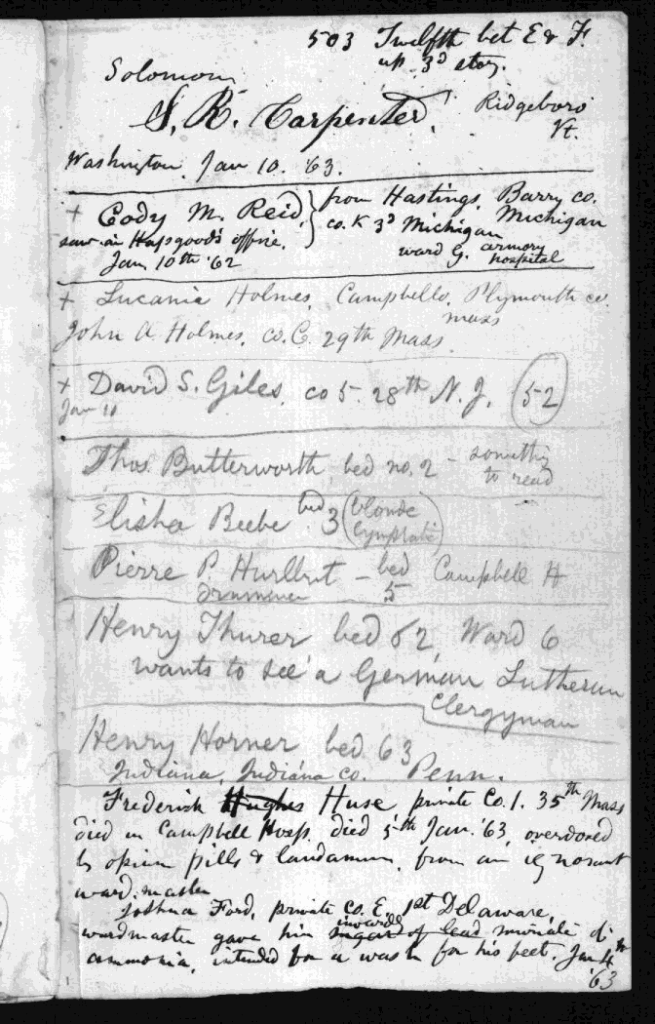
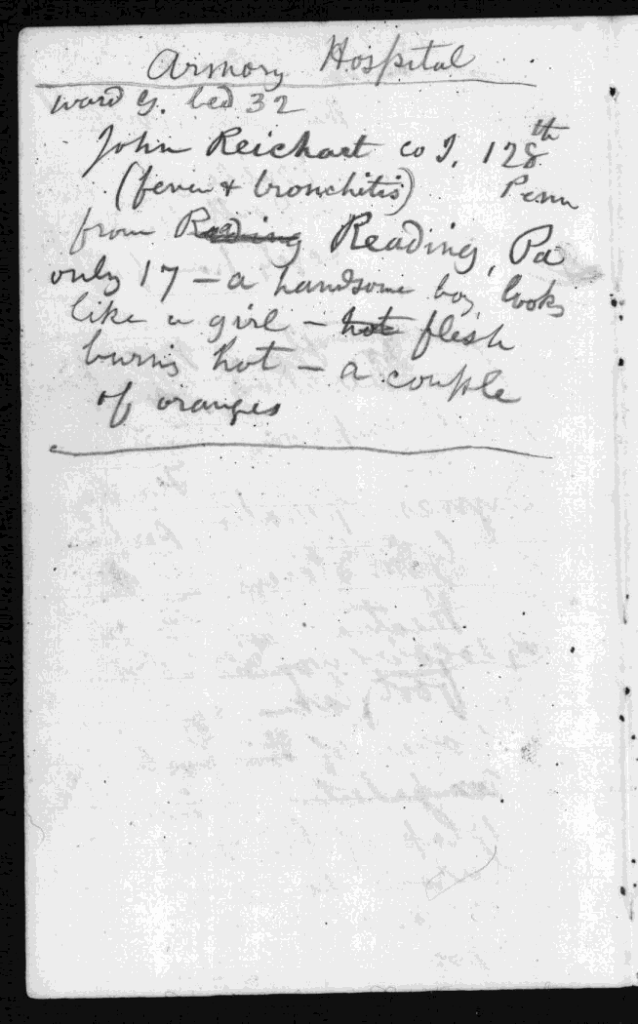
The Civil War Notebooks

When I viewed Whitman artifacts at the Library of Congress, I was able to see some pages of these notebooks in which Whitman kept track of the men he met and what they needed. These photos are actually from the Library of Congress rather my own, but they are clearer. I thought you might like to see just a few of his notes.

Dear Mother

As our reading for tomorrow, and the bio you read pre-Ice Age, said, Whitman traveled to Fredericksburg from NY in 1862 when he saw his brother George Washington Whitman listed among the wounded in the absolutely brutal battle that took place under our feet. (It wasn’t that uncommon for family members to come looking for their wounded and to help care for them; in the US there was no professional nurses’ training until the 1870s.) His brother was only lightly wounded, but Whitman remained across the Rappahannock River in the Union camp for a few weeks, where what he saw inspired his new calling as a “spiritual wound-dresser.” We will read some of his impressions for our second class focused on the war and its aftermath.

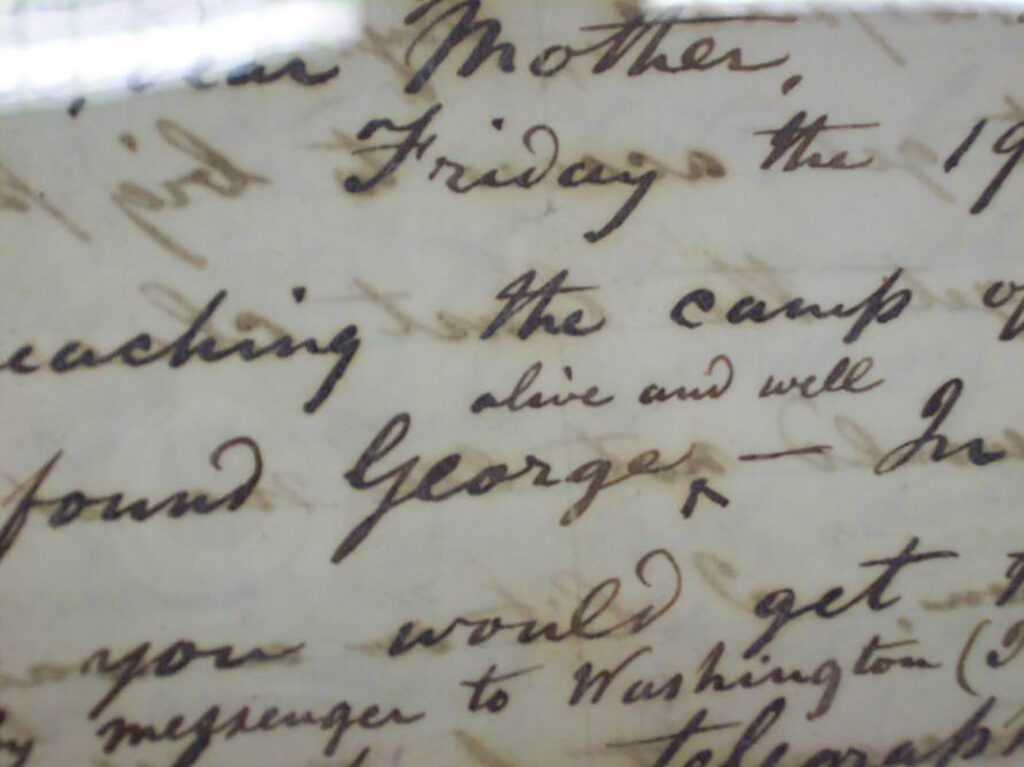
In class last time, as we discussed what it means to speak and write with a specific addressee in mind, I mentioned a letter of Whitman’s that I had seen at the Library of Congress after reading its content many times in print. In this letter, he writes to assure his mother that he has located George. This is my photo:

image from handwritten letter

It’s the caret that breaks me.

Knowing that his mother, the addressee, would be so frantically scanning this letter to find news about her son, he returns to what he has originally written and adds quick words to comfort her. In print, there is no sense that the phrase “alive and well” is an addition, is a marker of dialogic understanding and of a son’s love. Beautiful.

From “A Sunset” by Robert Hass (1941-)

Here’s another hard right turn. Think
Of how Walt Whitman loved this country,
Loved the President who died. Imagined
Himself as a hand brushing a fly from the brow
Of a sleeping child. In the dark
I thought of a radiant ordinariness
That burned, that burned and burned.

Walt Whitman, Idealism, and Capitalism Walk into a Bar

These ads appeared roughly 15 years ago, and when you’ve done your (excessive, sorry [kind of]) homework for Tuesday, you’ll recognize the first voice. As we consider Whitman’s America, and circa 2010 America, and 2026 America, I invite you to analyze these videos. Is this a portrait of America WW would have recognized? embraced? rejected? Why? Would it matter to Whitman, or does it matter to you, that the poetry, and the Whitmanish slogan, were mobilized to sell jeans (by a massive company worth billions, founded by a German Jewish immigrant that began making jeans for working men during Whitman’s lifetime)? For that matter, is this an America YOU recognize? If the ads are trying to sell both jeans AND a vision of America, what do you make of that vision?

Will You Give Me Your Hand? Will You Come Travel With Me?

Both Walt Whitman and Emily Dickinson believed in the written word not just as an articulation of one’s inner thoughts but, fundamentally, as a way to reach and even touch other people. They lived in an era that saw the nation fracture and turn on itself, massacring its own sons; that adhered to strict classes and saw both the bitter defense of, and legal end to, the abhorrent practice of slavery but not racial oppression; that saw massive national movements of Christian revival when they themselves often met the divine in other ways; that saw Oscar Wilde in England jailed and destroyed by a sexuality the world knew how to punish but not name; that felt the national growing pains of hundreds of thousands of (mostly European) immigrants and a colonization and settlement of western territories; that did not yet offer universal public education to its children. The word–a touch–was a form of connection in a rapidly changing world. And so it shall be for us. Get at it.