“A Wife– at Day Break” variants

Like me, you can’t stop thinking about this. I went first to my 3-volume Franklin variorum and then to the archive.

Probably in the spring of1861, ED wrote the first version of this poem on the back of an abandoned letter, which you can see here (scroll down to see text if the manuscript doesn’t show– it was glitching of course). It uses the word Master, but also has an entirely different penultimate line, “The Vision flutters in the door -,” and doesn’t have a stanza break. But the manuscript shows that the “Vision” line was canceled out for the one with “Eternity” we have in our book. There are some dash differences to the version in the Reading Edition also.

In 1862, according the variorum, she wrote another version, and this is marked F185B and is the version that Johnson chose, his poem J461. This version adds a stanza division and changes the word “Master” to “Savior,” also using an exclamation point at the end: “Savior – I’ve seen the face – before!”

Franklin believes this poem was added to a fascicle, ED’s privately rendered books, in the second half of 1863. In this copy, his F185C which matches our Reading Edition, we have a return to the word “Master” and the dashes as we discussed them today. It makes sense to me that the version in the fascicle would be the one he used when he created the Reading Edition without variants visible, because the fascicles are seen as final copies.

This clears up the history and variants, but not necessarily the way the alternative line is a ghostly presence in the poem.

ALSO: Simpson Library has our Reading Edition available online. (Thanks, Audrey!) I’m sorry I didn’t know this before. Please use this edition to complete our assigned readings.

Letter-poem vs. Poem-poem

I don’t know if this is controversial, but I’ve found after reading Emily Dickinson’s poetry in depth for the first time (besides the few poems in school/on Pinterest I’ve read) that I enjoy reading her letters more. Maybe I’ve gotten so used to Whitman’s long lines that I have been indoctrinated into liking longer lines more than short ones. The complex, image dense, and emotional letters make me feel like I’m “touching” Dickinson through the paper (Whitman style). Every word feels like it belongs, like every word was specially chosen after much deliberation. Yet, the words don’t feel forced. It doesn’t feel like the letters are trying too hard, or trying to be something they’re not. They’re also sooo image dense, from start to finish I am fully enthralled. It could also be the mildly taboo nature of reading someone’s personal writings. Who knows!

Ainsley’s CS for 3/24 Readings

In Martha Nell Smith’s Editorial History I: Beginnings to 1955, she says, “every writer is her first editor,” and goes on to mention how this idea elicits “special consideration” in Emily Dickinson’s case (272). I find this so interesting, on several accounts. We know from reading her letters to T.W. Higginson that she reached out to him seemingly searching for mentorship. He gave her poetic advice that she did not accept (rightfully so!). This leads me to my first (set of) question(s) connected to the quote I pulled–Could Dickinson have wanted to be her first (and only) editor? Why might she have reached out for advice? We know that she never explicitly asked for his advice (it’s just what seems most likely). If she wasn’t asking for feedback, what could she have been searching for? Additionally, the only editing feedback that Dickinson ever implemented was Susan’s advice for poem 124 “Safe in their Alabaster Chambers”. What does this say to you? I find it hard to ignore when thinking about Dickinson’s disapproval with the editing of her poems more generally, too. From what she said in her letter to Higginson about the editing of her work that was published in The Springfield Republican, her frustrations lie in the feeling of edits undermining the nature of the poem. I think that this speaks to how deeply she felt for Sue, beyond the obvious.

Smith also talks about how Sue’s process of assembling the “Book of Emily” was a slow one, partly due to her qualms with categorizing works that she did not believe could be categorized (because of Dickinson’s creative genius, and Sue’s deep affection for her creative genius) and partly due to her working during a time of immense grief. Vinnie was impatient with the speed, or lack thereof, in which Sue was working, so Vinnie discouraged Sue from continuing the project and sought other sources who might complete it faster. I don’t have a sister, and this could very well be Vinnie feeling protective over her sister in a time of grief, but I struggle not to feel a little bit critical over Vinnie in this–especially considering Dickinson not being keen on publishing her own work anyhow. Dickinson was such an appreciator of nature and its processes, and I feel that she would have appreciated Sue taking her time to work through her grief and to consider her qualms with the project. How do you feel about Vinnie’s impatience during this time? Where do you feel this impatience may have stemmed from?

The last lines of poems 5 and 7 stuck out to me immediately. Poem 5 is an assertion of love for Sue which ends in “Sue – forevermore!” Poem 7 rejoices in an everlasting summer that lives inside and ends in “Thy flower – forevermore!” The connection between the two is syntactically obvious, but I am curious about your thoughts about the connection between the two on a deeper level. Could Dickinson be aligning Sue with the summer and the bloom, vice versa, or something else? I really love these parallels and would love to hear your thoughts on them.

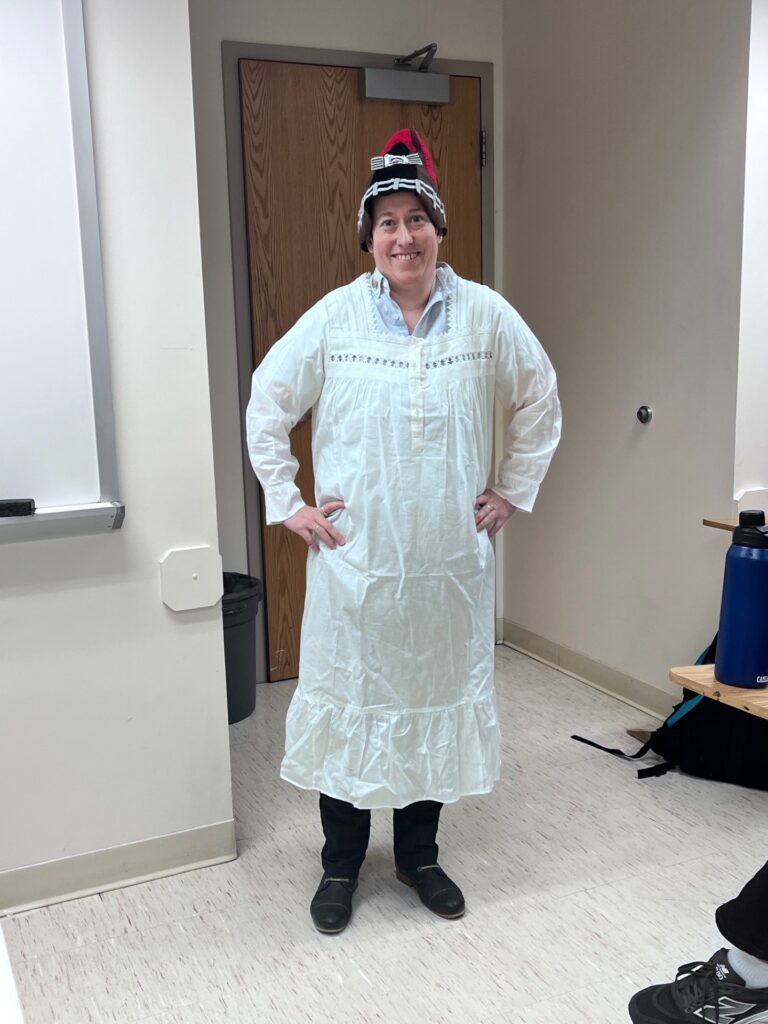
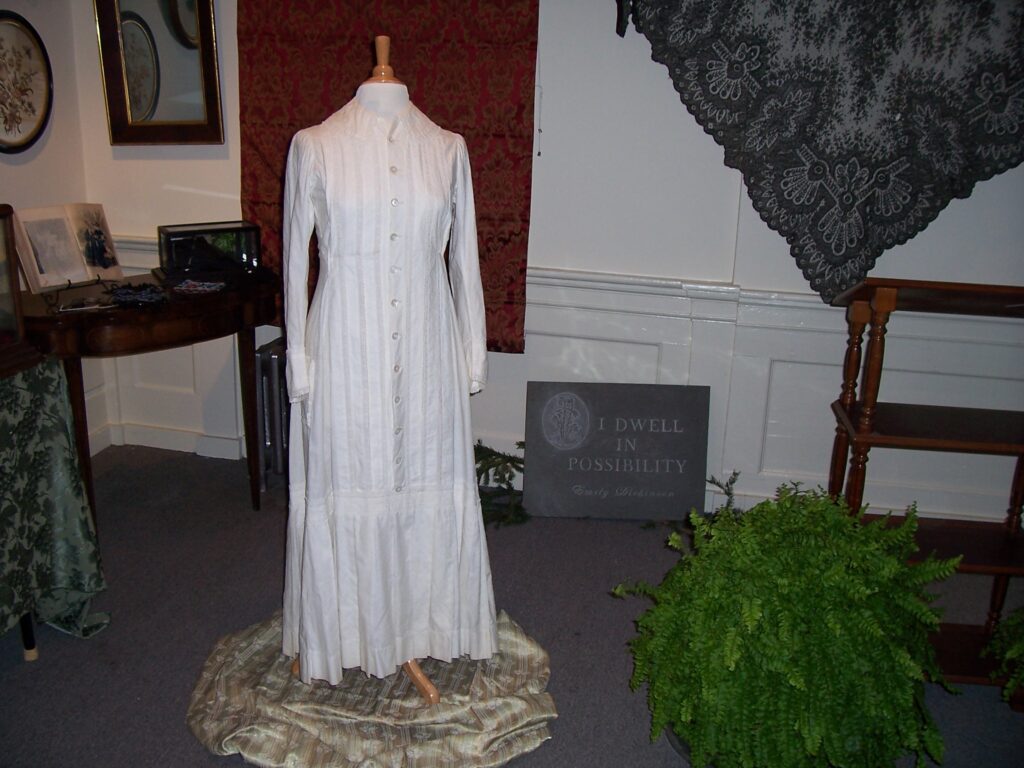
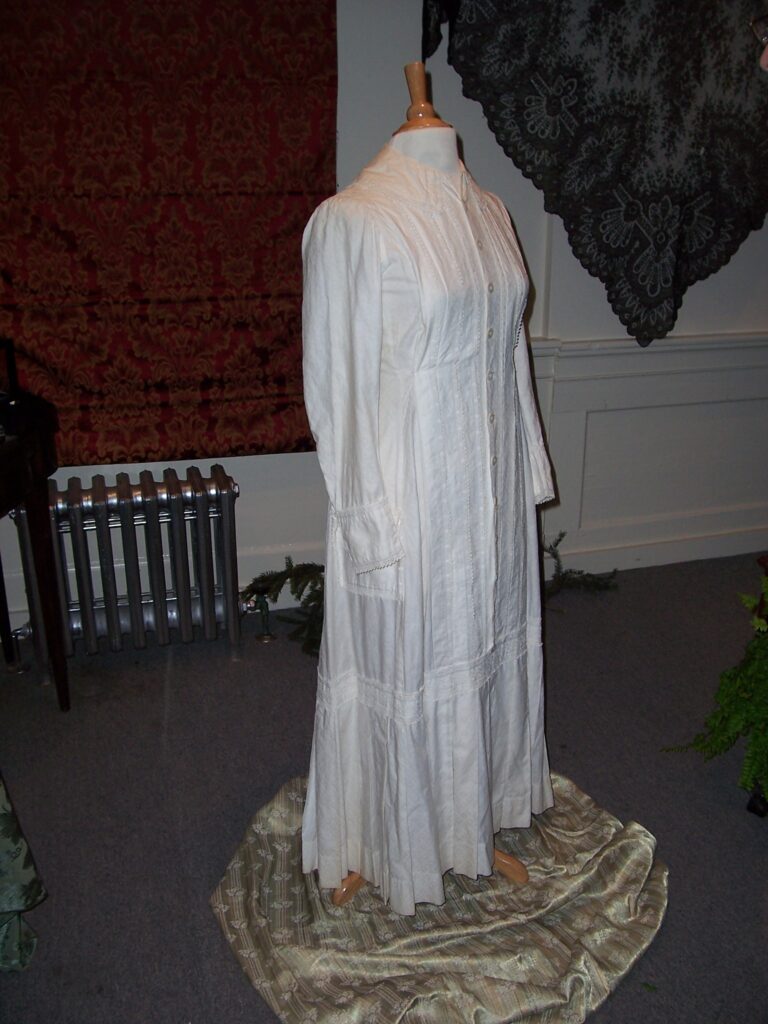
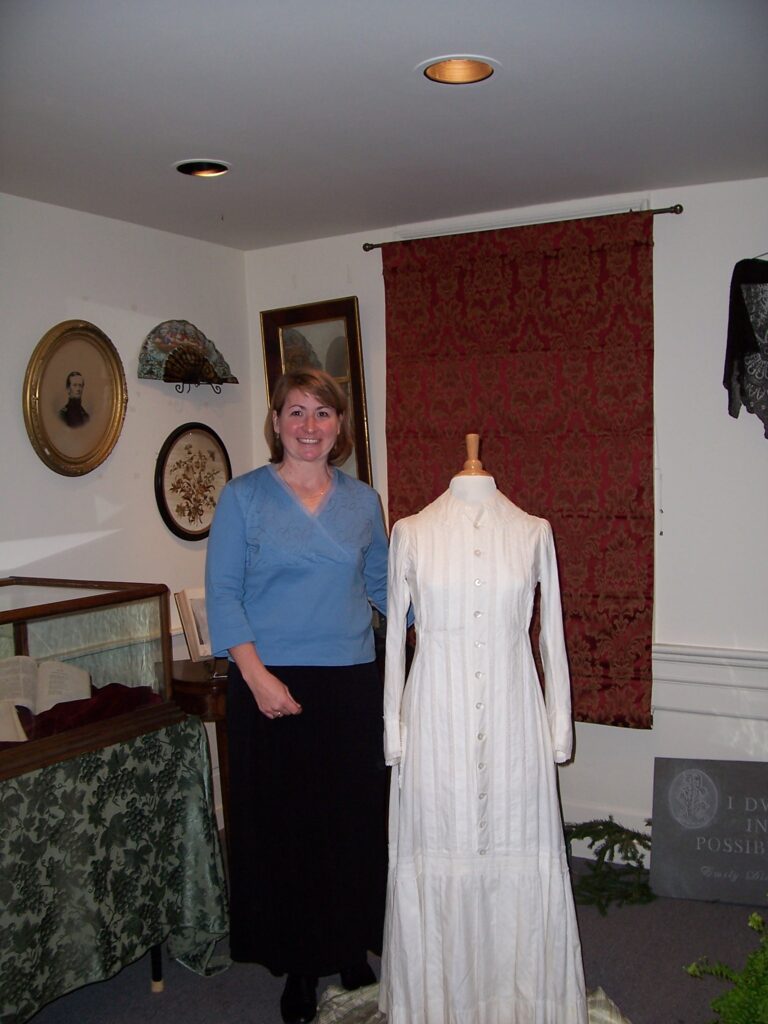
The Dress

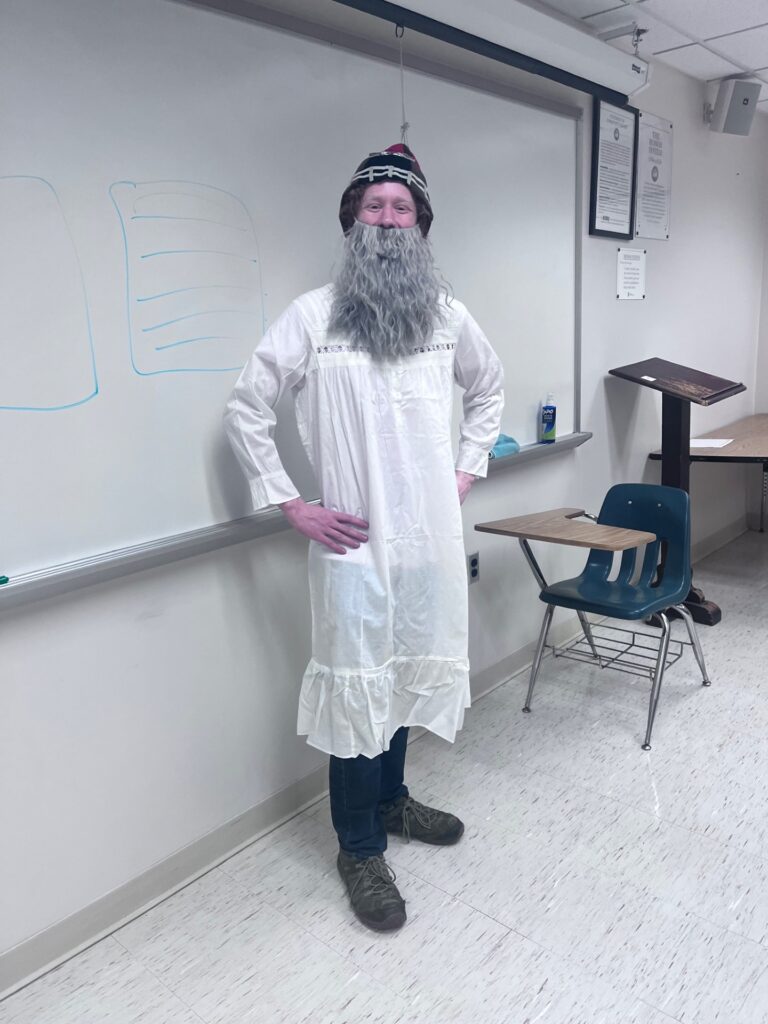
Amherst, Massachusetts, close to 20 years ago

Mariele’s Conversation Starter for 3/12

I’ll begin with a bit of an anecdote for you:

Last spring break, I traveled to Amherst, MA to visit Emily Dicksinon’s family homestead. In the car, my father said that he knew little-to-nothing about Dickinson despite having read her work in school. Prior to the break, on calls with extended family detailing my plans, I was asked “didn’t Emily Dickinson kill herself?” and “why do you like that creepy, reclusive poet?” This pattern of misinformation surrounding Dickinson was revealing itself within my family despite their relative literary enthusiasm. Naturally, for the rest of my car ride I interrogated my father about how Dickinson had been taught in his schooling. He replied saying that he was taught little to nothing about her life and they read her poems with barely any context. 

Getting more into the literary discussion now…

I’d like to note here that I have a complicated relationship with poets being taught in a biographical way. There is much value to be gained from this approach, but I see it being done in the most heavy-handed way solely to female poets. The digression from the texts themselves to more personal details can be at times voyeuristic in a way I feel begins to ignore the actual poems. Yet, when it comes to Dickinson I cast this notion (and often frustration) completely aside. Learning about Dickinson feels so integral to my enjoyment, comprehension, and appreciation of her work. Is it because I relate to her in some ways? Or perhaps it is a desire to disrupt the formation of Emily Dickinson as an American mythological figure? Regardless, I very much look forward to seeing how reading her poems again after reading her letters will change my reading experience. 

This brings me to my questions: 

  • If you’re new to Emily Dickinson, did you have any misconceptions that have been disproven? Proven?
  • While reading her letters so far, what has been your main focus? Is it the biographical elements or the prose/poems of the letters?
  • Did learning about the notion of the “letter-poem” genre change the way you read the next set of letters for class?
  • What has surprised you the most about reading Dickinson’s letters? 

Ever-Returning Spring

Today, this little purple crocus appeared in our backyard. Our first flower of Spring!

It’s not a lilac per se, but the fact that it appeared today on the day we discussed that particular poem feels meaningful to me. It’s like a little “hello” from the Whitman beyond, so naturally I wanted to share with you all.

The Civil War Notebooks

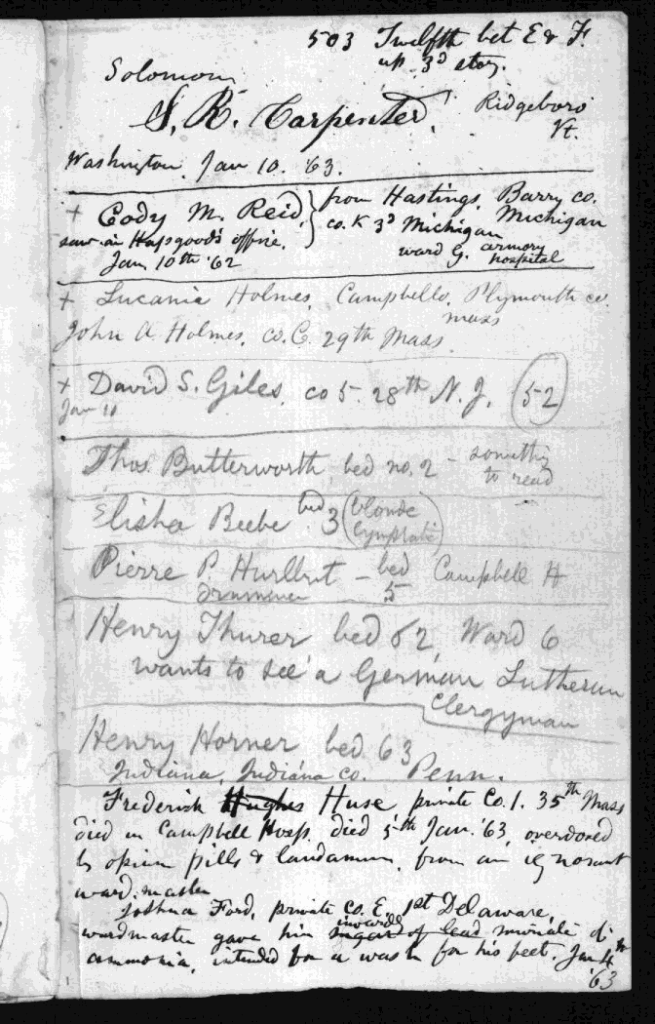
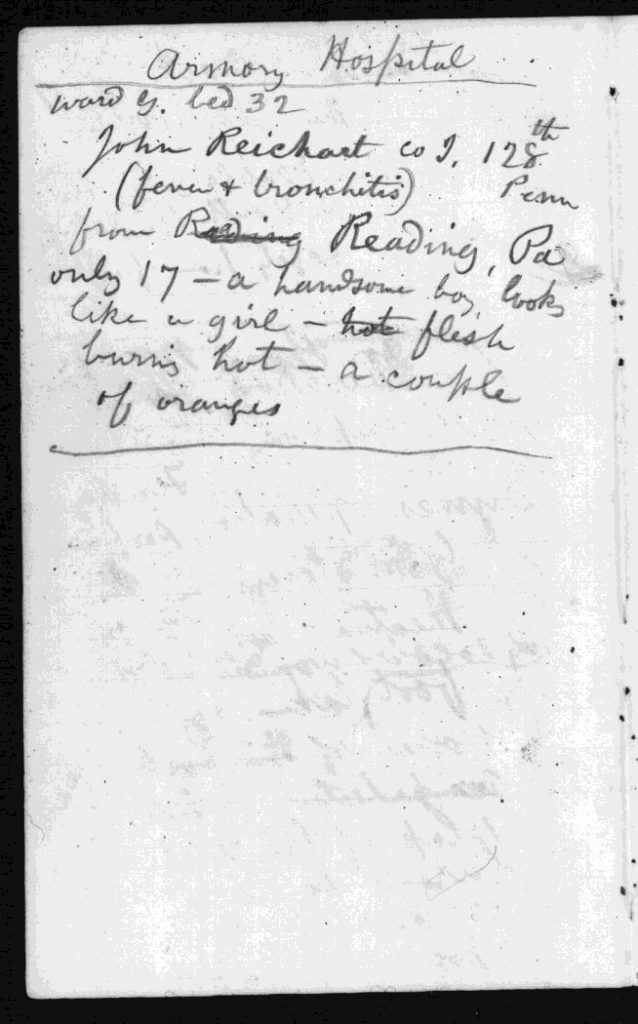
When I viewed Whitman artifacts at the Library of Congress, I was able to see some pages of these notebooks in which Whitman kept track of the men he met and what they needed. These photos are actually from the Library of Congress rather my own, but they are clearer. I thought you might like to see just a few of his notes.

Conversation starter, feb 12: Drum-taps

IN 1996, the year Felix Gonzalez-Torres died, I made a version of his “Untitled” (Perfect Lovers), 1987–90, by hanging two identical battery-operated clocks side by side on my living-room wall. I had always admired his work, and, like friends who had foil-wrapped candies sitting on their bookshelves or a sheet of paper from one his stacks pinned to their walls, I too wanted to live with a Felix. –Glenn Ligon, “My Felix”

When I first read My Felix, I already had my own Felix hanging for a year and a half. Much of Felix’s work relies on ready-made objects like clocks, or endlessly replenishable piles of materials (candies, prints, papers, etc.) which viewers are encouraged to take home with them, as they interact with his work. Whether we take candy from an art gallery, or hang our own clocks just-so, anyone can have their own Felix—this rides the line between democratic access and entitlement. Felix is all of ours, but Ligon’s Felix is his—my Felix is mine.

When we first discussed a distinction between Walt Whitman and “my Whitman / our Whitman / each’s-own Whitman,” I thought of this essay. Not only because the language is so similar, but because Felix and Walt have instilled the same instinct in those who respond to their work: to claim and construct a personal relationship, beyond the work, with the artist as a force.

Working through the height of the AIDS crisis, and himself HIV positive, Felix’s work is both sharply political and deeply personal. His work encompasses sculpture, printmaking, public installation, viewer participation… it can be hard to tell where any specific Felix piece starts or ends. For example, Untitled (Portrait of Ross in L.A.) is a work of art that consists of “just” a pile of candy placed on the floor. The work is specifically noted as having an “ideal weight” of 175 pounds, the weight of Felix’s partner, Ross Laycock, at the time of his own HIV diagnosis. Viewers are encouraged to take a piece of the candy, which represents the weight loss Ross experienced due to AIDS complications, while making literal the metaphor of the “sweet taste he would leave in your mouth” after meeting him. Does the “artwork” start with the gallery purchasing the candy? Putting it into the pile? With a viewer taking a piece? Does the work end when the candy is eaten or thrown away? Is each wrapper in a landfill still part of the work?

In 2010, Ross was displayed at the National Portrait Gallery exhibition Hide/Seek, along alongside an 1891 portrait of Walt Whitman by Thomas Cowperthwaite Eakins.

In tribute to the response by volunteers and caregivers to the needs of people living with HIV and AIDS in DC, the Washington Metropolitan Area Transit Authority and the DC Commission on the Arts and Humanities collaborated to engrave an excerpt from Walt Whitman’s poem “The Dresser” on the north granite circular entrance to the Dupont Circle Metrorail station. –WMATA Art in Transit, 2007

The exclusion of the last two lines of Wound-dresser by WMATA in its Dupont Circle installation is widely considered to be an overt act of queer erasure. 

…Ross 1983 (Many a soldier’s loving arms about this neck have cross’d and rested, / Many a soldier’s kiss dwells on these bearded lips.) 1865 Dupont Circle Metro Station 2007… “Untitled” 1989, Felix Gonzalez-Torres

Untitled, 1989 is the first in a series of text-based works by Felix. Described as portraits, the works were commissioned by collectors or institutions, with “short-phrase year-date” lists of events and objects, ranging in scale from global political moments to indecipherable personal sentiments. These works are mutable; collectors and curators are given the power to change the whole text of the work, adding and removing new dates and phrases at their own discretion with each new installation. For the retrospective Always to Return at Smithsonian’s National Portrait Gallery, curators Charlotte Ickes and Josh T. Franco chose to include the final two lines of Wound-dresser, to (even if temporarily) complete the poem for DC’s public.

In another room of the exhibition, (Portrait of Ross in L.A.) and the Eakins portrait of Whitman were reunited, alongside another work by Felix: Untitled (Leaves of Grass), a string of lights.

Part of my reading to prepare for this conversation starter was supposed to be Michael Moon’s paper Memorial Rags. This work seems to have kicked off an entire sub-genre of Whitman criticism which reframes Drum-taps through perspectives of the AIDS crisis. I first saw it referenced in Russell Ferguson’s Out There: Marginalization and contemporary cultures,a book I got only for a series of photo essays by Felix. Unfortunately, I wasn’t able to source the full Moon paper in time for this post. It’s obvious, though, that the construction of Walt Whitman as a forefather in both the stylistic development of “an American art” and as a figure in “an American queer canon” would suggest evidence of a lineage to follow him. Who gets to follow Walt? So much of his poetry demands that we follow him, that the reader of our time is as present as the reader of his time. As Whitman demands, we touch him through his books, Felix demands we take him, taste him through his:

People don’t realize how strange it is when you make your work, and you put it out to be seen and say, simply, “take me.” –Felix Gonzalez-Torres as quoted in his 1995 monograph by Nancy Spector

Whitman’s depiction of the Civil War throughout drum taps focuses on small interpersonal relationships, moments shared between him and soldiers, both living and dead. Out There summarizes Memorial Rags’s analysis of grief thusly: “Rather than looking beyond [Freud’s] ‘Mourning and Melancholia’ for other possibilities—Moon proposes fetishism, but a fetishism rescued from Freud’s 1927 account by making it a conscious means of extending our homoerotic relations, even with the dead…” Both Felix and Walt demand that we engage with their bodies in some physical way, even after their death. Felix does this through his candy portraits, Walt stresses this at the end of Song of Myself

To boil this down into more specific discussion questions (although I would also love to talk about this big nebula of connection between Felix and Walt, especially site-specific to DC):

  1. How does the construction of Whitman as a canonical/spiritual/mythological object affect the construction of a queer lineage or tradition in American art?
  2. How does homoerotic relation in Drum-taps color Whitman’s own beliefs around death, and the connections fraternal and/or erotic made at the brink of or across opposite sides of death?
  3. What does it mean to construct a “my Felix”, or a “my Walt”? Is artist-as-force or artist-as-ghost a metaphor? A physical interaction? A spiritual event? Especially for those of us who recreated Whitman’s voice for response 1, how did you view the process of channeling Whitman?

And this threat of what’s call’s hell is little or nothing to me,
and the lure of what’s called heaven is little or nothing to me;
Dear camerado! I confess I have urged you onward with me, and still urge                                                                            you, without the least idea what is our destination,
Or whether we shall be victorious, or utterly quell’d and defeated.
–As I Lay with My Head in Your Lap Camerado, Walt Whitman

although they were still planning on going to that exotic paradise, it was hard to forget about those images of the night before: all those bodies left by the death squads.
–Fetishism, Felix Gonzalez Torres

The ethics of representation

As promised in class, I am opening this topic for discussion since we didn’t get to it today. I think there are many ways that this connects to (but is not the same as) Whitman’s model of selfhood, which some of you may be writing about through the prompt in Response #1. The basic question might be phrased something like this: when Whitman represents, includes, or speaks for others, does he do so ethically and in a way that respects their otherness from him (in identity and experience)? I think we also want to think through what might be our contemporary understanding of that question as well as what it might have meant in his own historical moment.

A few passages in which we might ground discussion. Feel free to add more.

Section 24, page 211, the two stanzas beginning “Through me many long dumb voices”

Section 33 following the long catalog, starting page 224 with “I am a free companion” and continuing through the rest of section on 226.