“A Wife– at Day Break” variants

Like me, you can’t stop thinking about this. I went first to my 3-volume Franklin variorum and then to the archive.

Probably in the spring of1861, ED wrote the first version of this poem on the back of an abandoned letter, which you can see here (scroll down to see text if the manuscript doesn’t show– it was glitching of course). It uses the word Master, but also has an entirely different penultimate line, “The Vision flutters in the door -,” and doesn’t have a stanza break. But the manuscript shows that the “Vision” line was canceled out for the one with “Eternity” we have in our book. There are some dash differences to the version in the Reading Edition also.

In 1862, according the variorum, she wrote another version, and this is marked F185B and is the version that Johnson chose, his poem J461. This version adds a stanza division and changes the word “Master” to “Savior,” also using an exclamation point at the end: “Savior – I’ve seen the face – before!”

Franklin believes this poem was added to a fascicle, ED’s privately rendered books, in the second half of 1863. In this copy, his F185C which matches our Reading Edition, we have a return to the word “Master” and the dashes as we discussed them today. It makes sense to me that the version in the fascicle would be the one he used when he created the Reading Edition without variants visible, because the fascicles are seen as final copies.

This clears up the history and variants, but not necessarily the way the alternative line is a ghostly presence in the poem.

ALSO: Simpson Library has our Reading Edition available online. (Thanks, Audrey!) I’m sorry I didn’t know this before. Please use this edition to complete our assigned readings.


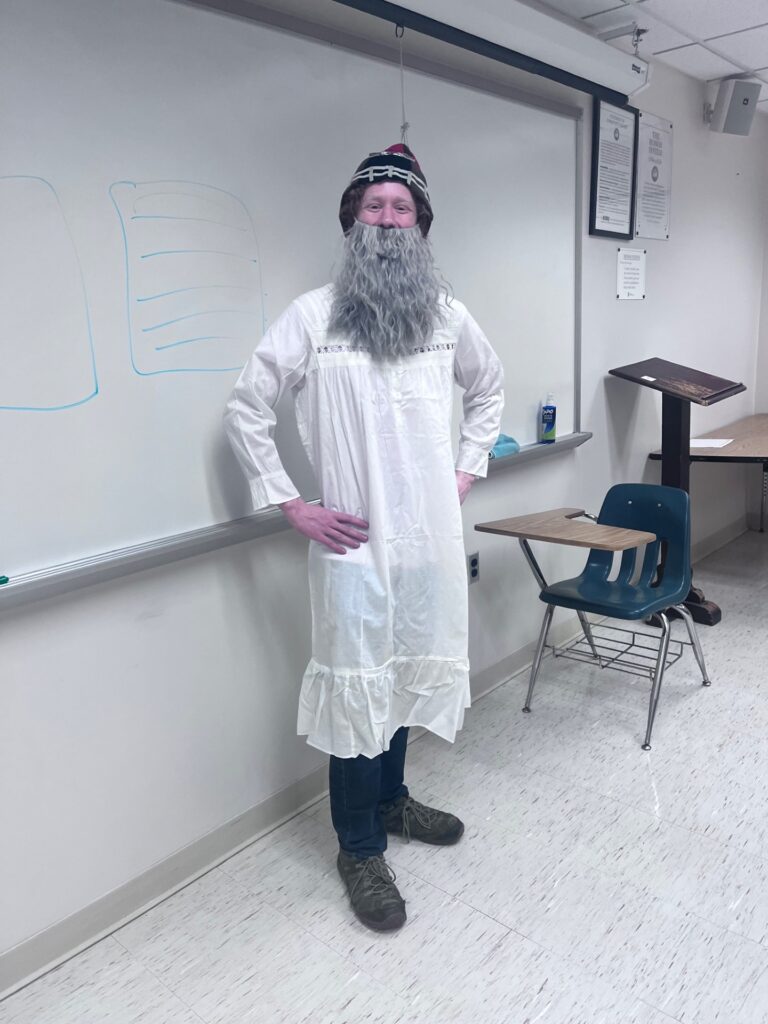
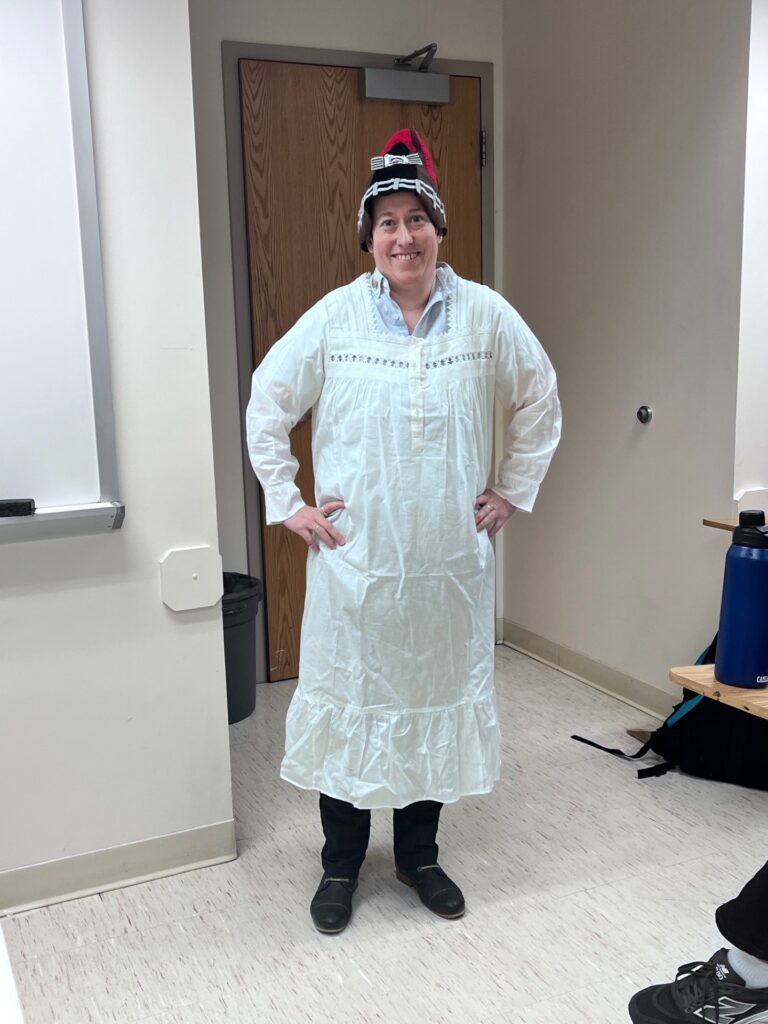
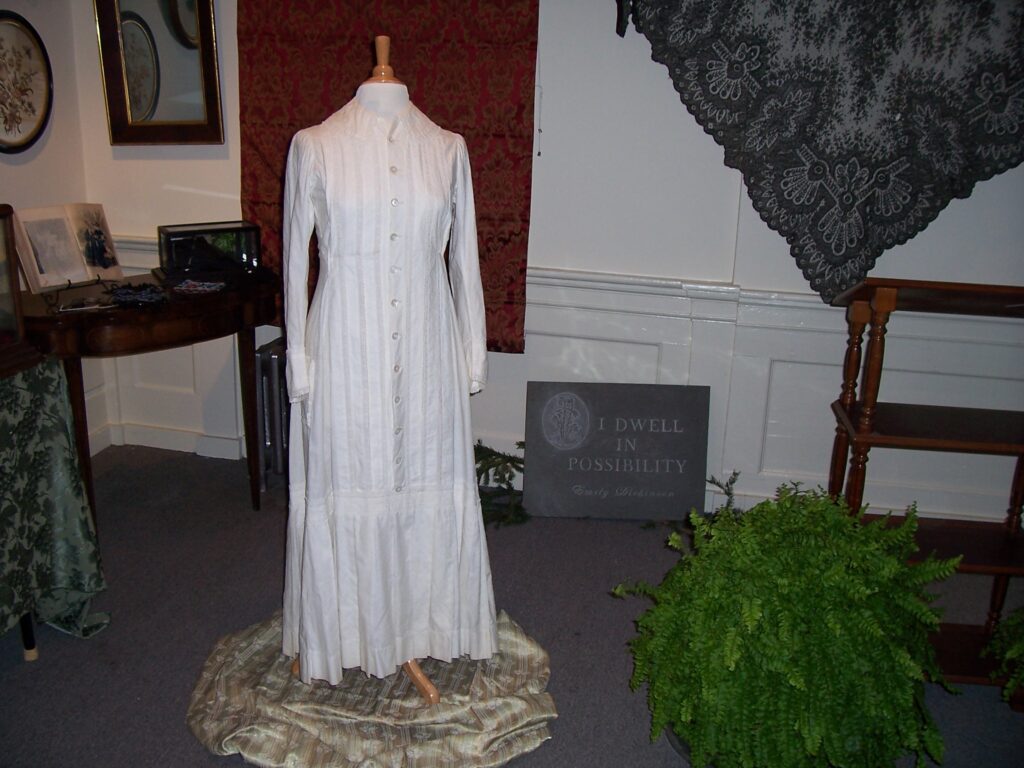
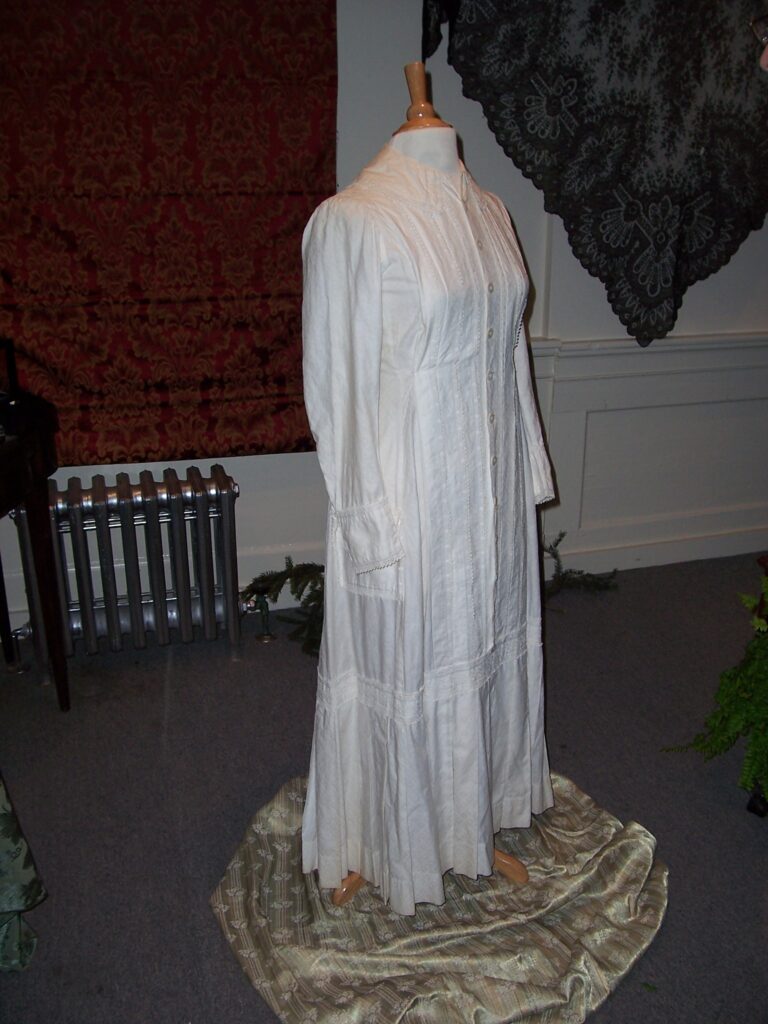
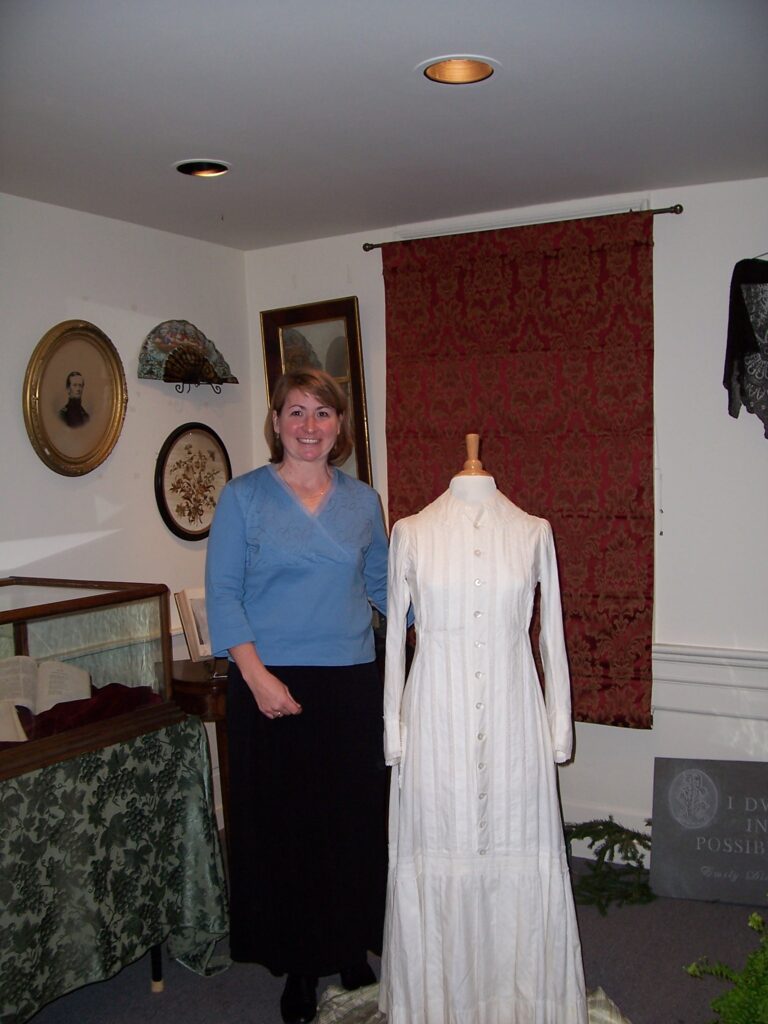
The Dress

Amherst, Massachusetts, close to 20 years ago

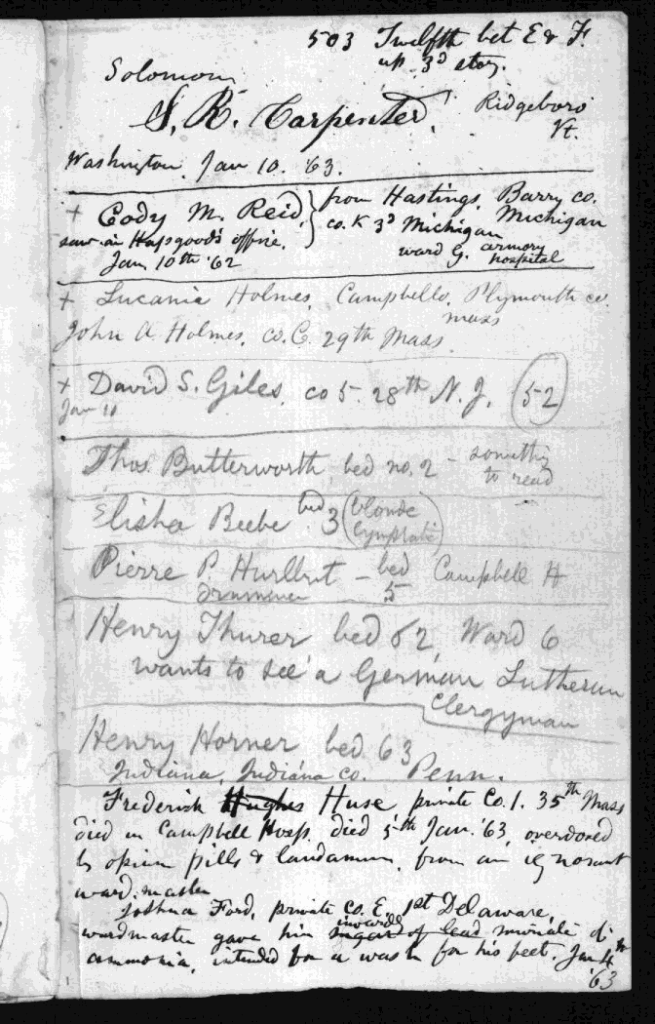
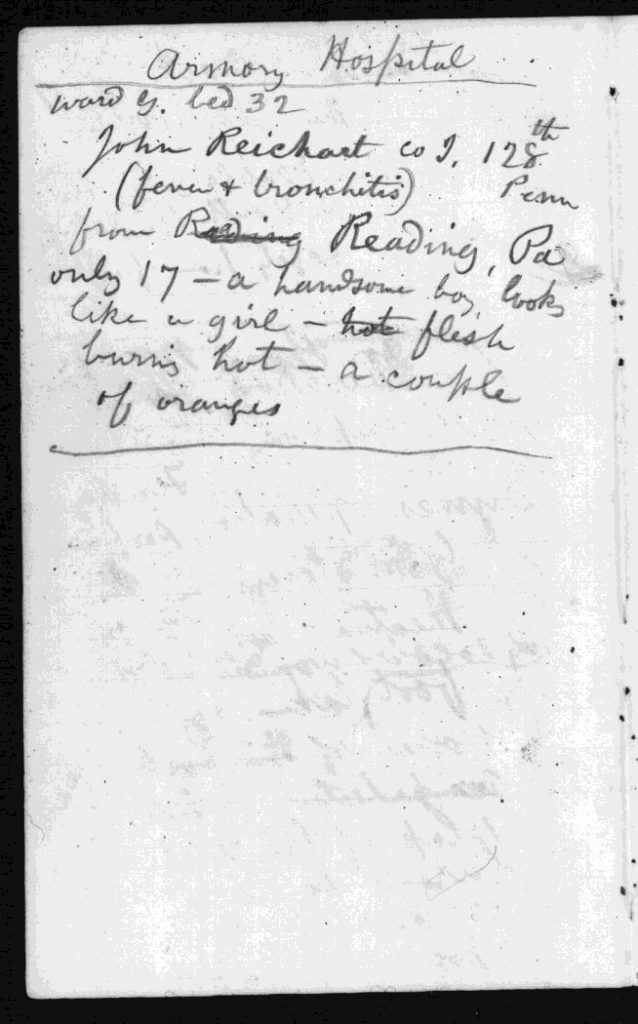
The Civil War Notebooks

When I viewed Whitman artifacts at the Library of Congress, I was able to see some pages of these notebooks in which Whitman kept track of the men he met and what they needed. These photos are actually from the Library of Congress rather my own, but they are clearer. I thought you might like to see just a few of his notes.

Wireless Whitman

Many years ago, when I was involved in the Digital Whitman course that I’ve described, my UMW collaborator Dr. Brady Earnhart and I were asked to come on the public radio show With Good Reason. Since much of what we discussed was wartime Whitman, I thought some people might like to listen. Our part is about 15 minutes and includes a haunting clip of a song Brady Earnhart wrote about Whitman.

Dear Mother

As our reading for tomorrow, and the bio you read pre-Ice Age, said, Whitman traveled to Fredericksburg from NY in 1862 when he saw his brother George Washington Whitman listed among the wounded in the absolutely brutal battle that took place under our feet. (It wasn’t that uncommon for family members to come looking for their wounded and to help care for them; in the US there was no professional nurses’ training until the 1870s.) His brother was only lightly wounded, but Whitman remained across the Rappahannock River in the Union camp for a few weeks, where what he saw inspired his new calling as a “spiritual wound-dresser.” We will read some of his impressions for our second class focused on the war and its aftermath.

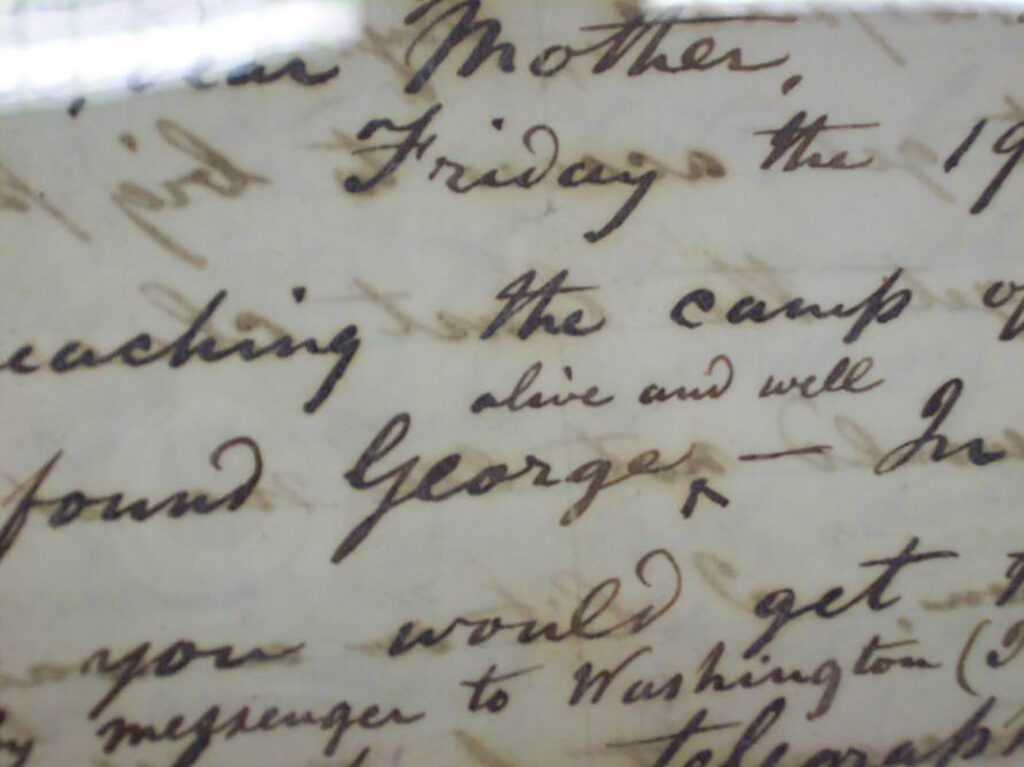
In class last time, as we discussed what it means to speak and write with a specific addressee in mind, I mentioned a letter of Whitman’s that I had seen at the Library of Congress after reading its content many times in print. In this letter, he writes to assure his mother that he has located George. This is my photo:

image from handwritten letter

It’s the caret that breaks me.

Knowing that his mother, the addressee, would be so frantically scanning this letter to find news about her son, he returns to what he has originally written and adds quick words to comfort her. In print, there is no sense that the phrase “alive and well” is an addition, is a marker of dialogic understanding and of a son’s love. Beautiful.