Algorithm Goddess Sends Me This
Reply

In Martha Nell Smith’s Editorial History I: Beginnings to 1955, she says, “every writer is her first editor,” and goes on to mention how this idea elicits “special consideration” in Emily Dickinson’s case (272). I find this so interesting, on several accounts. We know from reading her letters to T.W. Higginson that she reached out to him seemingly searching for mentorship. He gave her poetic advice that she did not accept (rightfully so!). This leads me to my first (set of) question(s) connected to the quote I pulled–Could Dickinson have wanted to be her first (and only) editor? Why might she have reached out for advice? We know that she never explicitly asked for his advice (it’s just what seems most likely). If she wasn’t asking for feedback, what could she have been searching for? Additionally, the only editing feedback that Dickinson ever implemented was Susan’s advice for poem 124 “Safe in their Alabaster Chambers”. What does this say to you? I find it hard to ignore when thinking about Dickinson’s disapproval with the editing of her poems more generally, too. From what she said in her letter to Higginson about the editing of her work that was published in The Springfield Republican, her frustrations lie in the feeling of edits undermining the nature of the poem. I think that this speaks to how deeply she felt for Sue, beyond the obvious.
Smith also talks about how Sue’s process of assembling the “Book of Emily” was a slow one, partly due to her qualms with categorizing works that she did not believe could be categorized (because of Dickinson’s creative genius, and Sue’s deep affection for her creative genius) and partly due to her working during a time of immense grief. Vinnie was impatient with the speed, or lack thereof, in which Sue was working, so Vinnie discouraged Sue from continuing the project and sought other sources who might complete it faster. I don’t have a sister, and this could very well be Vinnie feeling protective over her sister in a time of grief, but I struggle not to feel a little bit critical over Vinnie in this–especially considering Dickinson not being keen on publishing her own work anyhow. Dickinson was such an appreciator of nature and its processes, and I feel that she would have appreciated Sue taking her time to work through her grief and to consider her qualms with the project. How do you feel about Vinnie’s impatience during this time? Where do you feel this impatience may have stemmed from?
The last lines of poems 5 and 7 stuck out to me immediately. Poem 5 is an assertion of love for Sue which ends in “Sue – forevermore!” Poem 7 rejoices in an everlasting summer that lives inside and ends in “Thy flower – forevermore!” The connection between the two is syntactically obvious, but I am curious about your thoughts about the connection between the two on a deeper level. Could Dickinson be aligning Sue with the summer and the bloom, vice versa, or something else? I really love these parallels and would love to hear your thoughts on them.
…I think I like Emily Dickinson better than Walt Whitman. Yes, yes, I know I was a diehard Whitmaniac at the beginning of this semester, I even got my blog username from one of his poems… but there’s something about Dickinson’s writing, both prose and poetry – and speaking of both, I love that they overlap, prosetry if you will – that captivates me so so so much. She sees the world in such a unique and beautiful way, simultaneously whimsical and authentic. It also might be because I see a bit of myself in her (ie, I’m projecting). Who knows. She’s a wonderful mystery.
In a letter to Dickinson from Helen Hunt Jackson, Helen writes asking why Dickinson won’t consider publishing any of her works. She says that when she is dead and is looking back on her life, Dickinson will be sorry that she was so stingy with her work. It made me wonder if Dickinson would be or is regretting her decisions. Based on her reclusive and solitary nature, I’m not sure if she is disappointed. Her work has gotten out without her having to deal with the publicity that comes with it. If anything, I think that this is exactly what she would have wanted, if she wanted her work to ever be published at all.
In letter #342a, Higginson writes to his wife about meeting Dickinson. Something that really stuck out to me in this letter was his description of meeting Dickinson in person for the first time; he describes her as very meek, saying that she seemed frightened and childlike. This feels like the complete opposite of the Dickinson that we see presented in her letters. Obviously, this description of meeting her shouldn’t be too surprising as we know that she rarely sees new people, but the difference between the self-assured confidence she exudes in her letters and her poetry compared to the shyness that she shows in-person felt very drastic.
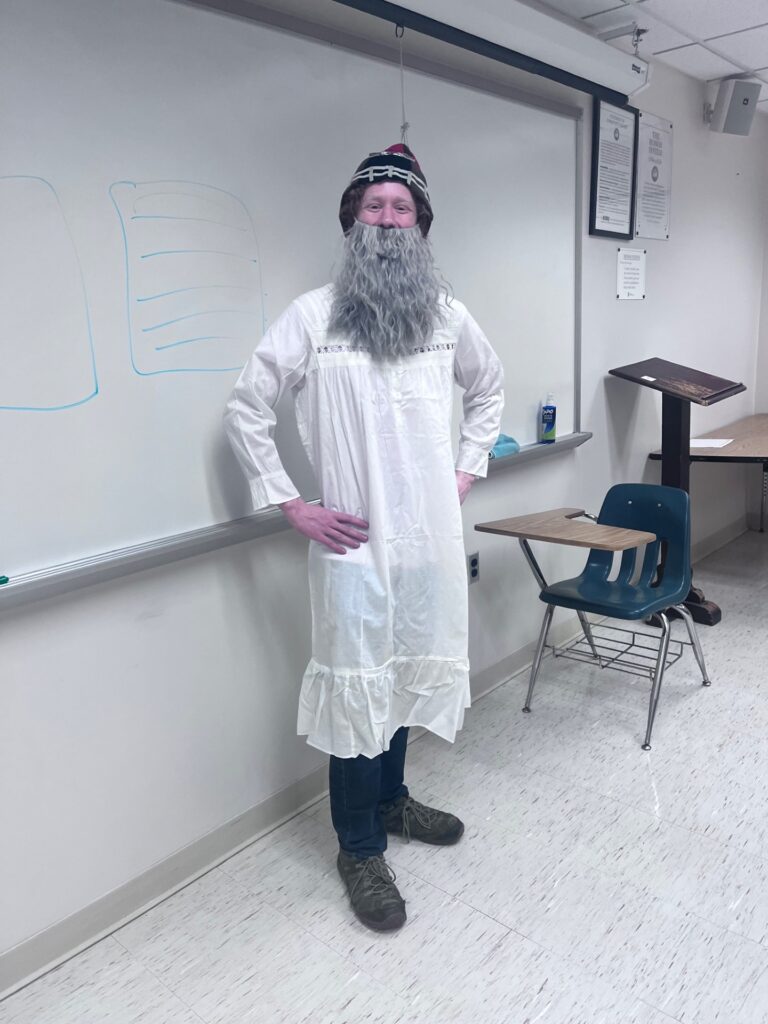
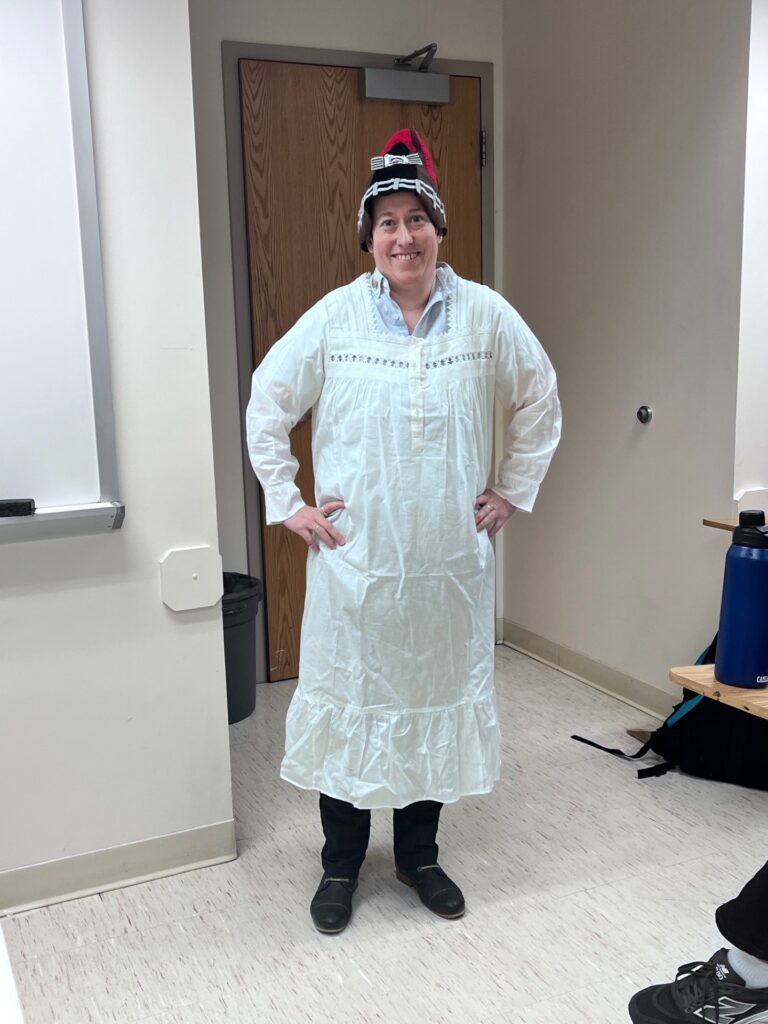
Hello! The letters for 3/19 consist of Dickinson’s correspondence to T.W. Higginson and Helen Jackson. I have a few questions in regards to Dickinson’s relationship to these two, as well as a question on a specific letter itself. Feel free to answer any!
Dickinson’s letters to T.W. Higginson and Helen Jackson are both very intriguing, especially when you look at their relationships. The letters between Higginson and Dickinson felt very special, especially as we see them over time. We know that Higginson acted as a mentor to Dickinson, and it is clear in their correspondences, but there also feels to be a deep friendship embedded. Dickinson writes to him in times of sorrow, illness, happiness, and more. I was wondering what people made of their relationship. While it is a mentorship, would you also ascribe something additional: parental, friendship, writers, all of the above? Do you find importance in looking at this relationship outside of just mentorship?
Additionally, Dickinson and Helen Jackson show a great friendship through their letters. In letters 573A-C, we see Jackson encouraging, and succeeding, in asking Dickinson to publish some of her writing. Helen even writes that she will take care of everything, and write from her own hand, just so Dickinson is read. Why do you think Helen was the one successful in getting Dickinson to agree, as we know she was reluctant to publish her works. Does Jackson also being a writer aid in her persuasiveness, or more her friendship? What is the importance of another woman encouraging Dickinson to publish her work anonymously?
Lastly, the letter that stuck out to me the most is letter 459A which is written to Higginson. The letter reads: “Nature is a Haunted House – but Art – a House that tries to be haunted.” This letter feels very poetic, and it was thought to be seemingly sent on its own. I don’t want to give too much of my thoughts away, as to answer the question. So, I am curious about your reading of this letter (letter-poem?). What is Dickinson trying to express through calling nature a “Haunted House,” and art as “trying to be haunted?” Does the letter work to invoke a specific sort of emotion, specifically when thinking of the word haunted? Also, is there something to be said about the capitalization of certain words? I just want everyone to have a go at this letter in any way they see fit!
I look forward to hearing thoughts!
Amherst, Massachusetts, close to 20 years ago
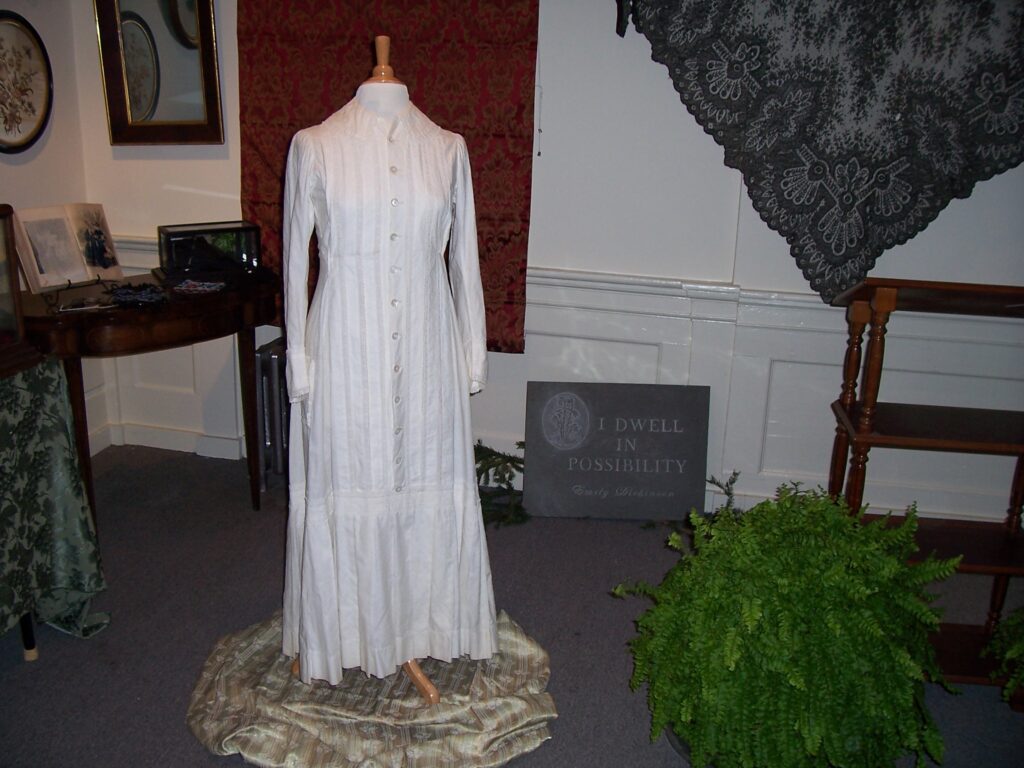
In letter #73, Dickinson is writing to Susie (unsurprisingly). Towards the beginning of this letter, Dickinson says “I cannot deny myself the luxury of a minute or two with you” (77), implying that taking the time to write to Susie is the same, or at least similar enough, to actually spending time with her. However, closer to the middle of the poem, Dickinson says “How vain it seems to write, when one knows how to feel” (77), contradicting the implication of her previous statement. This idea reminded me of the conversation we had in class about how Whitman would feel about social media as a form of connection. Is letter writing, to either Dickinson or to us, a form of connection that is either the same or similar enough to actually seeing someone in person? Or is there something fundamentally unique about being in-person that cannot be replicated through letters, no matter how intimately you write to someone? Also, what would Dickinson think of social media?