Amherst, Massachusetts, close to 20 years ago
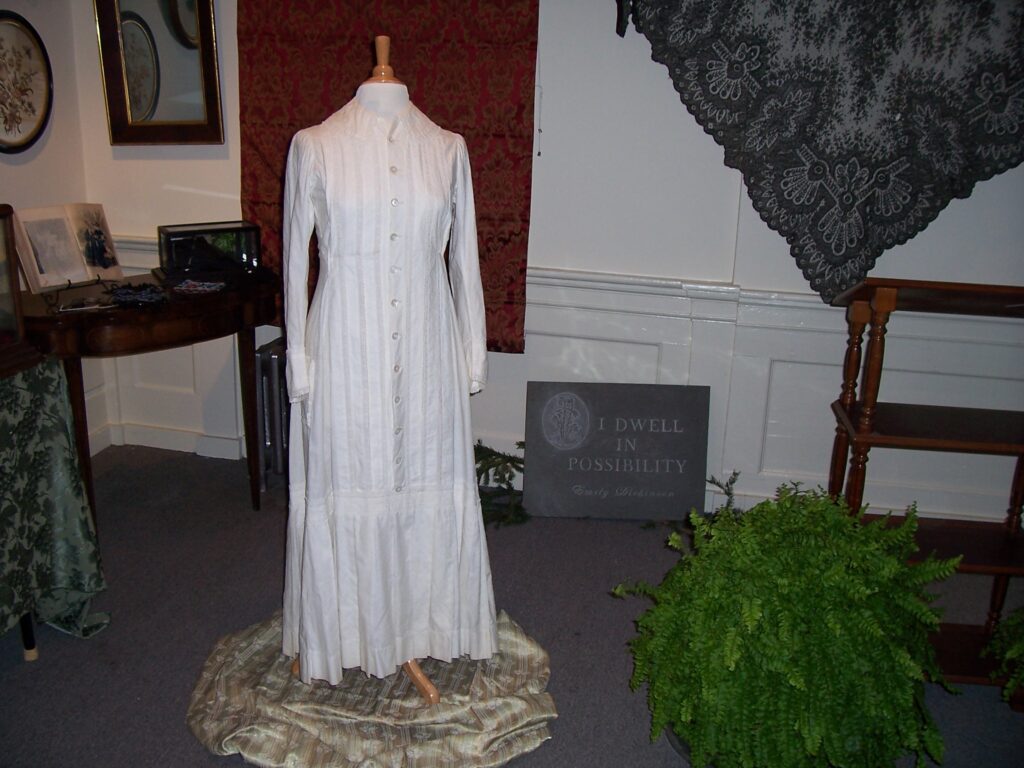
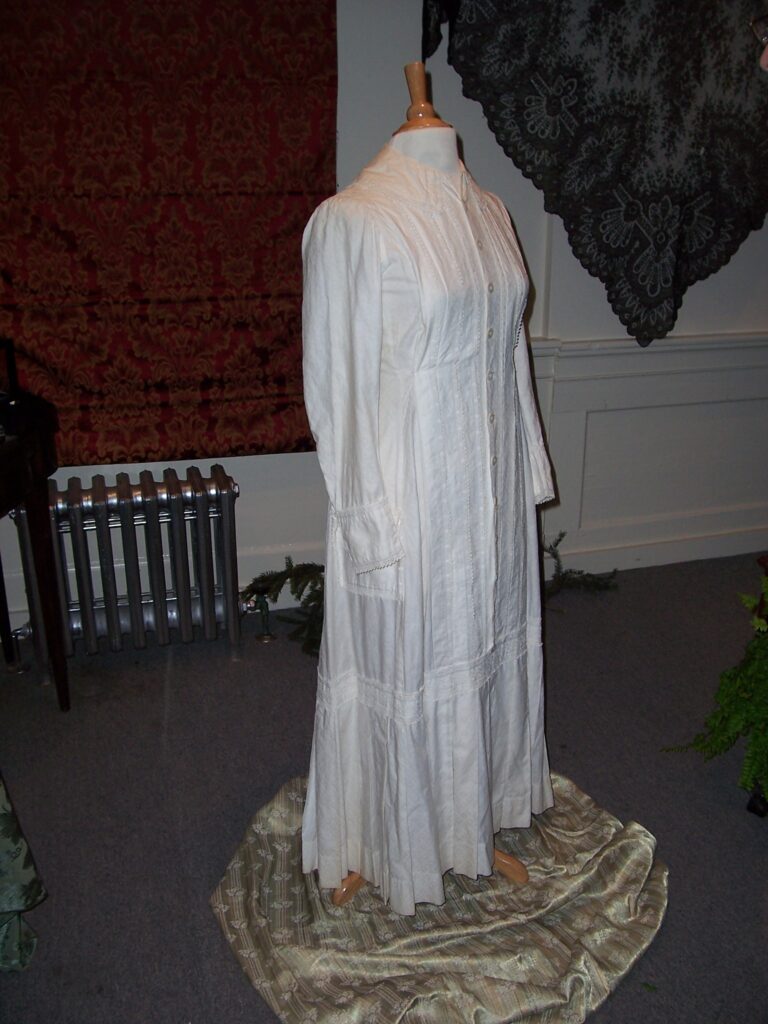
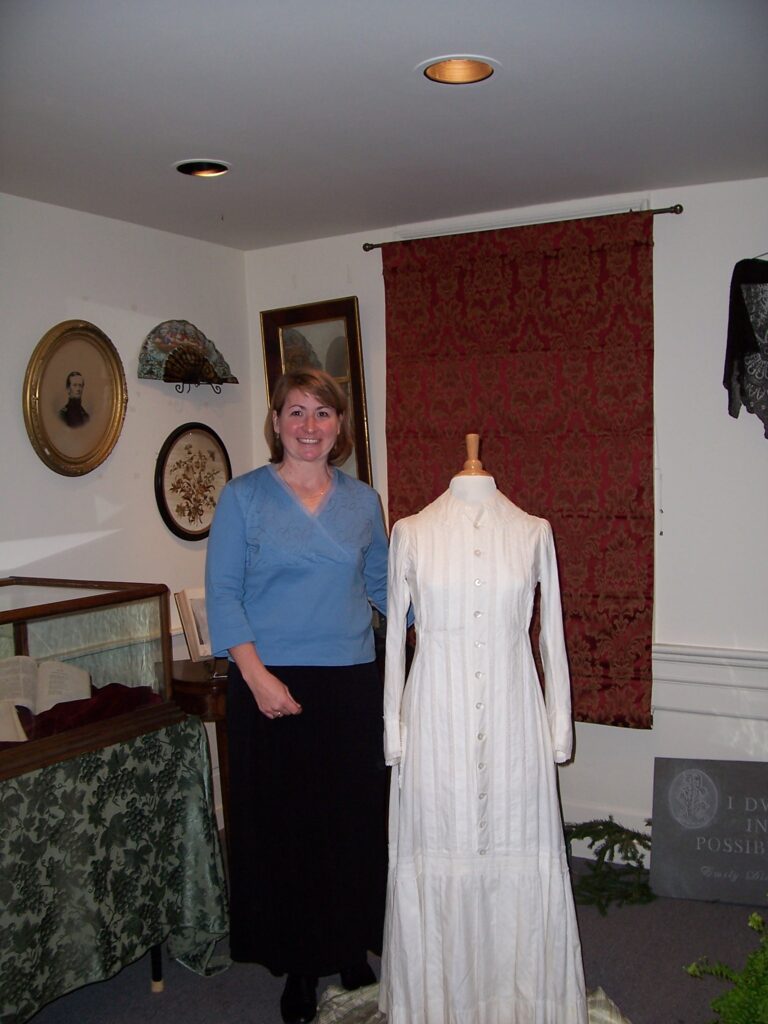

Amherst, Massachusetts, close to 20 years ago
In letter #73, Dickinson is writing to Susie (unsurprisingly). Towards the beginning of this letter, Dickinson says “I cannot deny myself the luxury of a minute or two with you” (77), implying that taking the time to write to Susie is the same, or at least similar enough, to actually spending time with her. However, closer to the middle of the poem, Dickinson says “How vain it seems to write, when one knows how to feel” (77), contradicting the implication of her previous statement. This idea reminded me of the conversation we had in class about how Whitman would feel about social media as a form of connection. Is letter writing, to either Dickinson or to us, a form of connection that is either the same or similar enough to actually seeing someone in person? Or is there something fundamentally unique about being in-person that cannot be replicated through letters, no matter how intimately you write to someone? Also, what would Dickinson think of social media?
This may be a rather surface-level thought, but when reading for class on Tuesday, I couldn’t help but notice that as we get further into the letter collection and therefore further in time, Dickinson’s letters get noticeably shorter. Not only that, but they also include more phrases and writing that feel reminiscent of poetry rather than prose. This could just be a consequence of Dickinson just getting more involved in her own poetry, so she has less time to write letters, as well as causing poetic writing to become more prominent in her letters. However, I do wonder if there is some other reason for this; is it possible that it is more of a conscious choice that Dickinson made?
In Dickinson’s letters to Susan, or rather, “Susie,” a common subject she playfully and humorously writes of is men and their inadequacy. One instance is in Letter 73, “Vinnie is sewing away like a fictitious seamstress, and I half expect some knight will arrive at the door, confess himself a nothing in presence of her loveliness, and present his heart and had as the only vestige of him worthy to be refused.” She mocks this hypothetical man for believing that his existence is in any universe enough to offer a woman – that his value is from his existence and not excellence.
Another instance is in Letter 85: “I do think it’s wonderful, Susie, that our hearts dont break, every day, when I think of whiskers, and all the gallant men, but I guess I’m made with nothing but a hard heart of stone”. (every day just shows how exhausting it all must be, to perform, to deal with men).
And another in Letter 56: “We will be willing to die Susie – when such as he have gone, for there will be none to interpret these lives of our’s.” (there’s so much more to this in the letter, but some of the references I’m too unfamiliar with/there’s too much there to quote right now)
Proceeding, she begins a new paragraph – or stanza – speaking of growing old, and by the end she declares, “to be old dont seem a thing so sad” (Letter 73). Being a spinster, closed from the doings of men she so strongly wishes to be distanced from, comes as a great relief, and one seems to to propose to Susan so subtly.
This mockery of man is just a piece of the “otherness” Dickinson felt – and Susan presumably felt as well, although maybe not to such a great degree – when writing to Susan. Dickinson, who never formally joined a church and grappled with the idea of God and religion, was also detested by the idea of Susan and her joining the church community, especially clear in a quote from Letter 77:
“the people who love God, are expecting to go to meeting; dont you go, Susie, not to their meeting, but come with me this morning to the church within our hearts, where the bells are always ringing, and the preacher whose name is Love – shall intercede there for us!”
The words “you” and “their” being italicized emphasize the otherness so clearly: us vs. them. Dickinson so badly wishes to stake a claim in their union, and in a way dissuade Susan from following the herd and instead remain true to her, true to Emily. She even later in the letter describes their “solitude” as their “Sabbath,” furthering the idea that “Love” is their preferred and only religion.
In a later letter, their separation from normalcy, she writes, “the Jesus Christ you love” (Letter 73). Dickinson draws a clear distinction that this Jesus is one Susie (as referred to as “Sue” in this letter) loves, not she, making it clear Susie has joined the ones Dickinson feels so strongly against. The way she assigns Jesus to Susan – “you love” – feels like a betrayal and a line drawn in the sand, as Dickinson makes it clear it is “you,” not “and I.”
“Susie” as a literary character in the letter-poems acts as both relief AND grief to the narrator, represented consistently as something of comfort Emily cannot have. The “otherness” is only emphasized by Susie’s absence to Dickinson, who she has repeatedly expressed feeling incomplete without, wanting to shy away from the world and hide within Susie, literally.
“hide away from them all; here in dear Susie’s bosom, I know is love and rest, and I never would go away, did not the big world call me, and beat me for not working” (Letter 85).
Emily relies on Susie as comfort, from not only labor, but from the expectations placed on her as a woman, as a (probably) closeted homosexual, as an “other” in her ideology and reflections, and as a woman who refuses to conform in the social comforts that the church and a man provide. Thus, Susie is the only character who truly relieves this. Dickinson makes her a metaphorical place to hide, therefore she uses her “bosom” as a physical place, making her the physical embodiment of the only “place” she can truly be herself.
Do you think, in some way, the position Susan is forced in is unfair? Do you feel as though Dickinson is placing too much responsibility on Susan for her own comforts from the world? How has not reading Susan’s replies adjacent to Dickinson’s poems affected your understanding of them? Do you feel as though knowing her feelings towards Susan – and towards men – will affect how you continue to read Dickinson’s letter-poems?
I’ll begin with a bit of an anecdote for you:
Last spring break, I traveled to Amherst, MA to visit Emily Dicksinon’s family homestead. In the car, my father said that he knew little-to-nothing about Dickinson despite having read her work in school. Prior to the break, on calls with extended family detailing my plans, I was asked “didn’t Emily Dickinson kill herself?” and “why do you like that creepy, reclusive poet?” This pattern of misinformation surrounding Dickinson was revealing itself within my family despite their relative literary enthusiasm. Naturally, for the rest of my car ride I interrogated my father about how Dickinson had been taught in his schooling. He replied saying that he was taught little to nothing about her life and they read her poems with barely any context.
Getting more into the literary discussion now…
I’d like to note here that I have a complicated relationship with poets being taught in a biographical way. There is much value to be gained from this approach, but I see it being done in the most heavy-handed way solely to female poets. The digression from the texts themselves to more personal details can be at times voyeuristic in a way I feel begins to ignore the actual poems. Yet, when it comes to Dickinson I cast this notion (and often frustration) completely aside. Learning about Dickinson feels so integral to my enjoyment, comprehension, and appreciation of her work. Is it because I relate to her in some ways? Or perhaps it is a desire to disrupt the formation of Emily Dickinson as an American mythological figure? Regardless, I very much look forward to seeing how reading her poems again after reading her letters will change my reading experience.
This brings me to my questions:
I like that we get to read Dickinson during Spring as in her writings, instead of the somber notes that I used to read in them, I see how full of life she was. Coming out of seasons that are typically the most hard, at least for me, (maybe also being without Whitman’s words for a second) these words resonate so much more. Outside looks like how she is describing in her letters and I get to experience that alongside her.
I don’t know, I’m being parasocial, but happy.
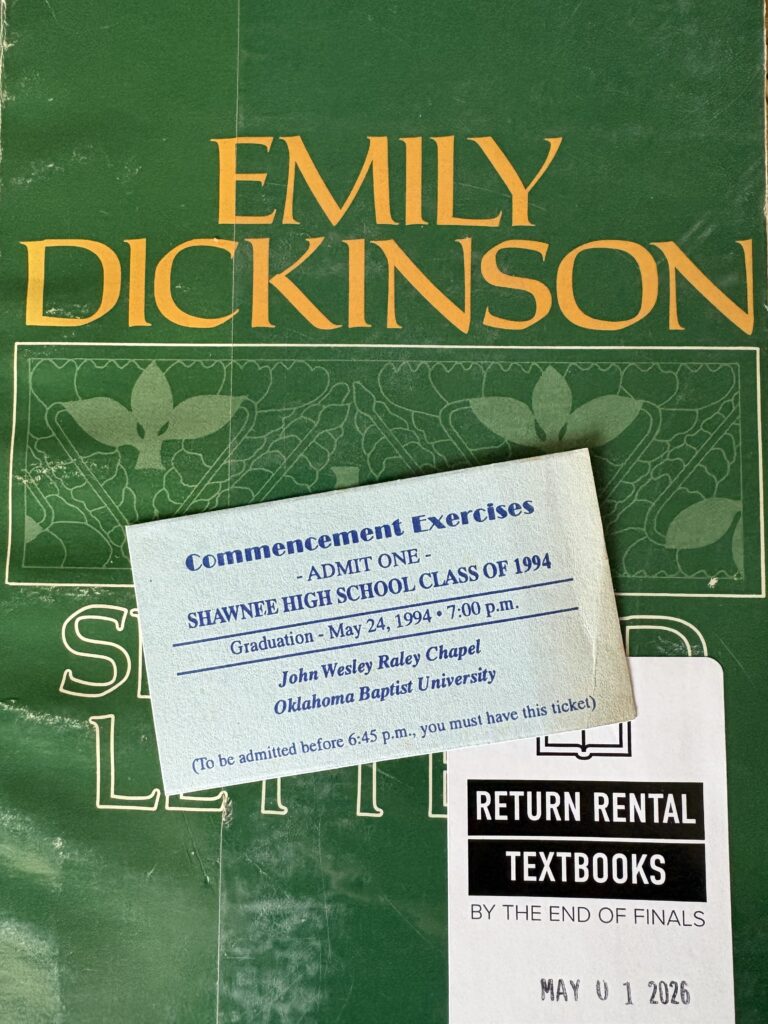
I opened my book of ED’s letters from the UMW bookstore and this Oklahoma high school graduation ticket from 1994 popped out. I don’t have much to say, but I think it is so special that ED has traveled so far from her home is Massachusetts.
Maybe it’s the 13 years of Catholic education but my eyes were immediately drawn to all of the God stuff in these letters. As it says in the note on Letter 46 churches were a social hub and often hosted a number of musicians as well as delivering services. Of course then it makes sense for the Dickinsons to be involved with their church socially as well as theologically. What stood out to me was a specific section of Letter 13 to her friend Abiah Root.
“But I feel that I have not yet made my peace with God. I am still a s[tran]ger- to the delightful emotions which fill your heart. I have perfect confidence in God & his promises & yet I know not why, I feel that the world holds a predominant place in my affections. I do not feel that I could give up all for Christ, were I called to die.”
I really love this section of the letter for a couple of reasons but mostly because Emily Dickinson is so connected to depictions of death but, at least in 1846, she was not willing to be a martyr. In the biographies on the Dickinson museum site, It was clear that her connections to death came more so in her later life during her “writing days” and “later years” but it is still so interesting to read a letter from when she is 16 to her friend in which she is grappling with the implications of being ready to die for Christ if called. This is especially interesting because she was pretty consistently sick throughout her young life and would have had to face certain elements of mortality with family members even before the time period in the late 1800s that was especially filled with death. I think that this calls to mind the mentality of the popular culture at the time that a woman her age would feel obligated to her faith in this way. However, it seems that Emily is not the only one to have feelings about martyrdom. Emily tells Austin that Vinnie “thinks ancient martyrs very trifling indeed” (Letter 66). As we read her poetry and delve into the eras of her works that center on death I am intrigued to see how these connections to religion get more complicated or resolved throughout her poetry.
God and organized religion seem to be more prominent in Dickinson’s life and letters due to societal and community expectations as well as personal beliefs. Based on her biographies and letters Dickinson’s relationship with spirituality has a nuance and depth that may seep into her poetry.
So my archive project has to do with a lot of the photography of Walt Whitman, and I think some of my very favorite photos of Whitman are those of him taken with children. So often there’s the assumption that people in the 19th century were incredibly stern and unsmiling simply because of how long and still you had to sit to get a photo taken. But these photos of Whitman with children are truly so endearing, and I wanted to share them with you all!
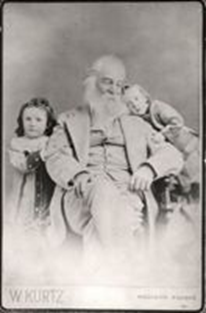
This photo was taken with the children of a friend of Whitman’s who housed him for long periodical stays in New York. Whitman also said he would sometimes go for walks with the children when he stayed there which is so sweet.
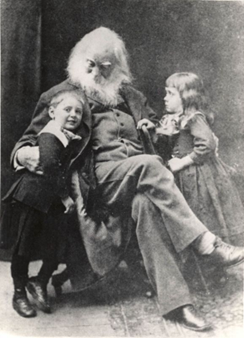
This photo is of Whitman with the niece and nephew of a friend, Jeannette Gilder.
Anyways, I just really liked how tender and fond he seemed of children and how much expression is found in these photos.
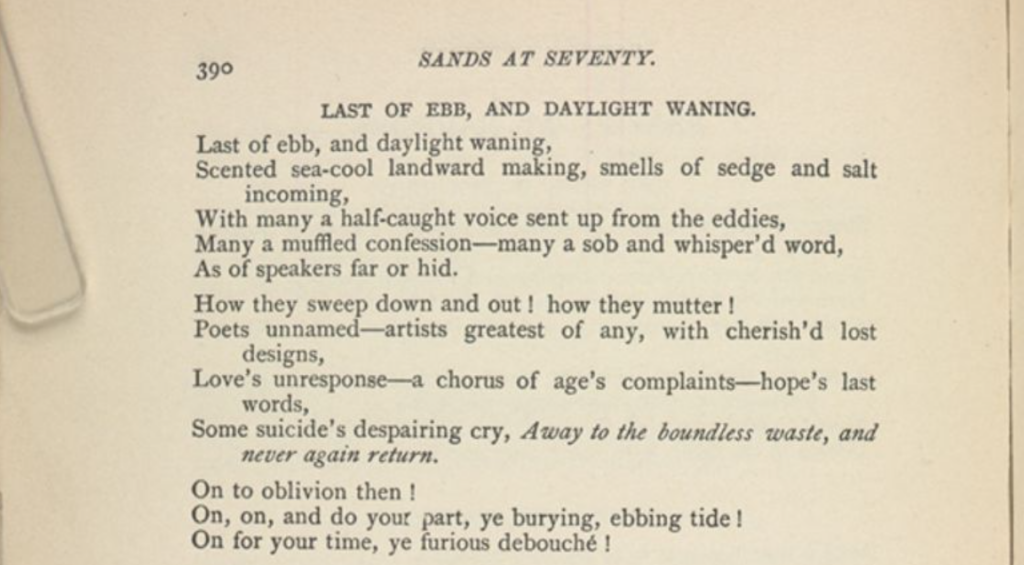
I came across this particular poem while looking through Whitman’s manuscripts (this is the published version), and wanted to share it for those who may not have read it. I find its depiction of sorrow and loss, backdropped by the ocean, incredibly beautiful.