A Whitman Letter

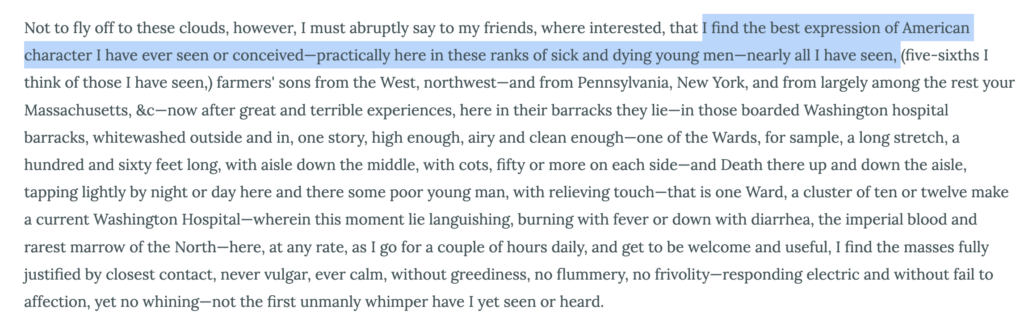
I was quickly looking at the archives, specially Whitman’s letters, and I found this letter he wrote to Ralph Waldo Emerson during the Civil War. I just think it connects so well with what we were discussing in class the past couple days in regards to Whitman and war that I had to share. The highlighted bit is something that stuck out to me: his connection to America and the soldiers. This letter definitely shows his “spiritual wound dresser” character ! (also notice the word electric again…)

Ever-Returning Spring

Today, this little purple crocus appeared in our backyard. Our first flower of Spring!

It’s not a lilac per se, but the fact that it appeared today on the day we discussed that particular poem feels meaningful to me. It’s like a little “hello” from the Whitman beyond, so naturally I wanted to share with you all.

Whitman’s Prose

When reading for today, I was really interested in the difference between Whitman’s poetry and prose. Specifically, it was interesting to me to compare the very abstract and theoretical nature of Whitman’s poetry to the very literal and factual nature of his prose. I’m not sure yet which one I prefer though I have grown found of his poems and the messages behind them.

Poetry vs. Prose

When reading “Memories of President Lincoln” and excerpts from Specimen Days back-to-back, I was really intrigued by Whitman’s different “voices” or tone when comparing the pieces.

I really enjoyed reading the poems and found them to be quite sad, which makes sense due to the subject matter. Even with Whitman’s sometimes ethereal descriptions with the stars and the singing of the bird, I think it succeeded in showing the impact of the loss of Lincoln’s life. Section 15 in particular did a great job describing how the dead do not suffer but those they have left behind do. All that to say that I really liked them.

Obviously the subject matter within Specimen Days is grim and real, but Whitman is surprisingly composed and neutral about it for the most part. Everything is simply listed off without much lingering on any of the content. We are given (barebones) descriptions of the environments but we lose the introspection we get in Whitman’s poetry. It does make sense contextually as Whitman, and in turn the reader, is always moving and working and cannot afford to sit and grieve all that is happening. That is not to say that I dislike this style as I think it can be emotional in its distinct lack of emotions from Whitman. Yet by the end of the readings with “The White House by Moonlight,” Whitman’s poetic descriptions have returned. He takes the time to absorb and reflect on the environment around him, and notably does not mention anyone dying around him.

The Civil War Notebooks

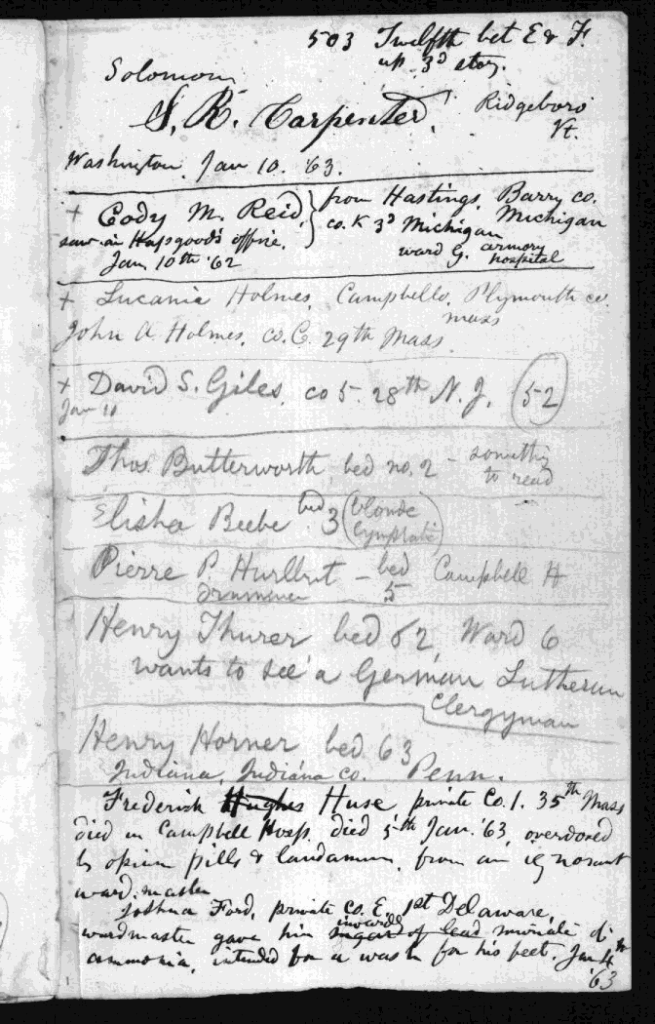
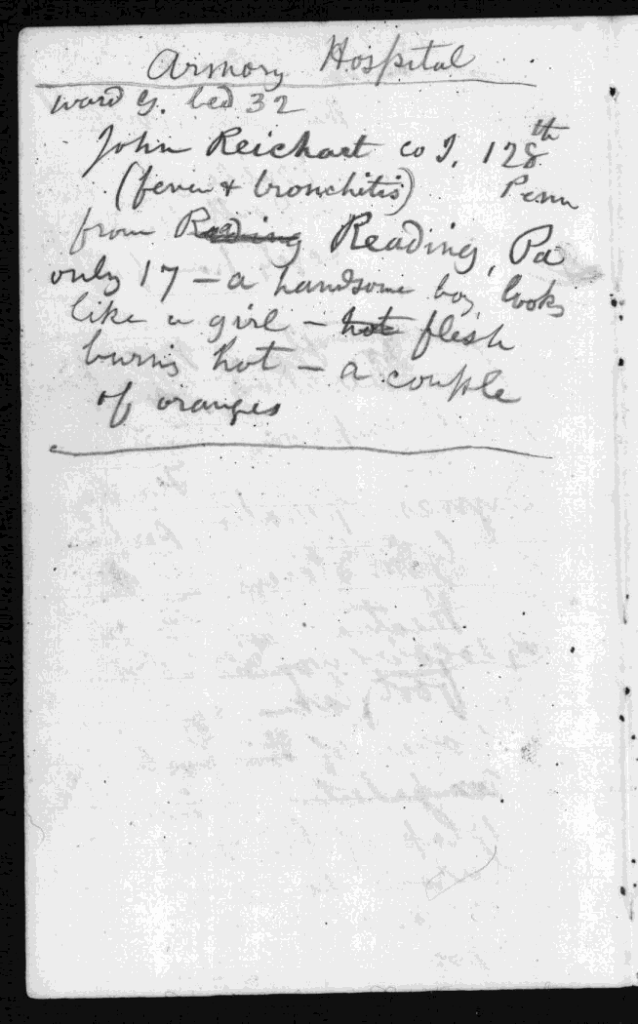
When I viewed Whitman artifacts at the Library of Congress, I was able to see some pages of these notebooks in which Whitman kept track of the men he met and what they needed. These photos are actually from the Library of Congress rather my own, but they are clearer. I thought you might like to see just a few of his notes.

Electricity in the 1800s?

My work from February 10th (because apparently it failed to upload after I hit publish and I didn’t see until I went to comment something today! Don’t you love technology!)

As a science nerd one of the first things, I thought about when reading “I Sing the Body Electric” was what electric meant in the 1860s. Obviously, electricity was only just beginning to be used at this time, and it wasn’t until 1882 when the first commercial power plant was built. Whitman clearly did not have the same definition of ‘electric’ as we do today so that leads me to question what did he envision when he wrote “I Sing the Body Electric”?

If I eradicate electricity from my knowledge, the first thing that comes to mind when reading this line is lightning which inherently connects to Whitman through the theme of nature. I think it’s fair to say that Whitman was also thinking along these lines, as later on in section 5 he literally says, “I see my soul reflected in Nature”.

Throughout this poem Whitman emphasizes the connection of body and soul, saying they cannot be separated and they’re essentially the same thing expressed in different ways. I read this in 2 ways. Firstly, I can see it as encouragement to accept your own physical form and a celebration of the human body which was a radical concept during a period of conservatism and privacy. However, I can also see it as a political statement. The soul is scared, there is no question about that, but if the soul and the body are one that means that the body is also sacred. This means that all bodies should be treated with the respect the soul demands regardless of race, age, class etc. This goes back to what we’ve said many times about Whitman’s inclusivity and desire to represent all voices. In this poem he talks about “A man’s body at auction” and essentially says that even the highest bids cannot be high enough for the soul is priceless. There are many more examples of equality in this poem and I’m not going to list them all, but it is something that stood out to me as I read it for the first time.

I Sing the Body Electric at the Superbowl Halftime Show

My work from February 10th!


While reading “I Sing the Body Electric” I couldn’t help but be reminded of the superbowl halftime show from Sunday the 8th. In Bad Bunny’s performance he highlighted elements of Latin American and Caribbean culture that seem personal and universal at the same time. He displayed various types of labor, including more gendered labor like the beauty industry, that everyone watching could relate to. Even those whose family isn’t from Puerto Rico could recognize elements of themself in the performance. Now where does Whitman come in? The body electric celebrates the perfection of the human body indiscriminately and for all of its power and meaning. What really stood out to me while reading was section 3 about the old man full of beauty and vigor. Specifically lines 14 and 15 “They did not love him by allowance, they loved him with/ personal love,” (Whitman “I Sing the Body Electric”). To me, the idea of personal love permeates through not only this poem but all of Whitman’s work. Where I feel it most is in his cataloguing and listing of parts of the body or parts of a community that are both incredibly broad and specific. Lists like section 2 and 9 recognize the individual intimately by representing their role or community. Since the halftime show I have seen countless videos of families from around the world reacting to the inclusion of some part of them in the performance. Bad Bunny’s simple act of listing all of the countries in the Americas as he exited the stadium has the same impact as Whitman’s recognition of the farm worker, the wrestler, the house keeper, or the mother. The inclusive nature of both works represents this idea of not loving by obligation but because of who they are and every perfect piece of them. Bad Bunny doesn’t know everyone from Canada to Chile just as Whitman didn’t know everyone in America, but both artists recognize the individual, lead with universal love. There is also so much to say here about their respective wants and their visions of unity in America but that is for another post. 

Wireless Whitman

Many years ago, when I was involved in the Digital Whitman course that I’ve described, my UMW collaborator Dr. Brady Earnhart and I were asked to come on the public radio show With Good Reason. Since much of what we discussed was wartime Whitman, I thought some people might like to listen. Our part is about 15 minutes and includes a haunting clip of a song Brady Earnhart wrote about Whitman.